I created this video in June of 2024 at the end of that cruising season. I had intended to post this then, but apparently I forgot.
We have Indigo Lady stored on the hard (on land) for hurricane season and through the holidays. A ton of work goes into preparing her for longterm storage in a hot and humid environment, and we take several days to complete it. Fortunately, we’re getting more efficient the longer we cruise, which is nice. Lists also help us stay on target.
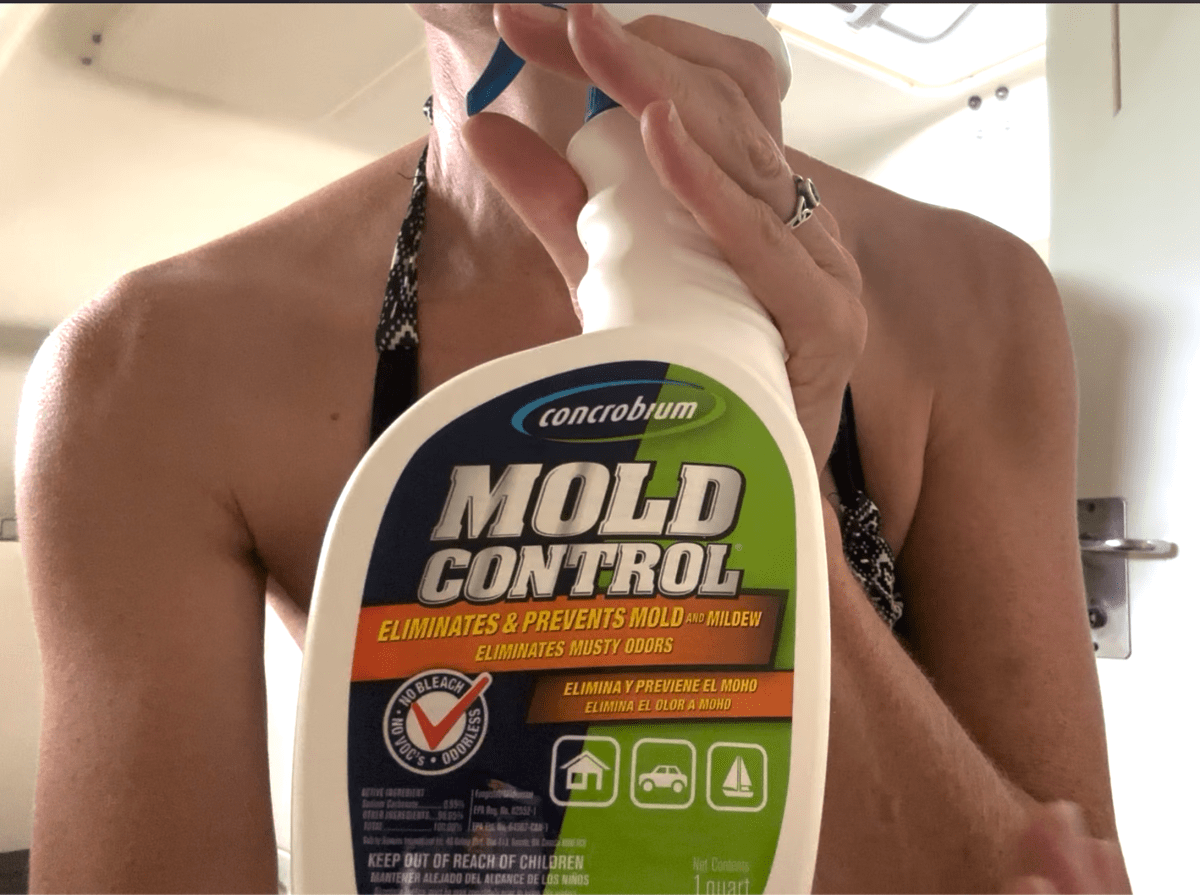
Indigo Lady doesn’t seem all that big until we start to close her up (or open her up). We have four cabins and heads, plus the salon and galley to clean. All things fabric are stowed in tubs and bags with dessicant packets so they don’t grow mold. We move everything near the salon and galley windows into the cabins to give them a break from the UV light. We stow electronics cables and such in tubs with dessicants. There are numerous systems that have to be prepped for storage as well. Finally, because we store her in hurricane belt, we have to take everything that normally lives in the cockpit and move it indoors, so the items can’t become wind-blown hazards should a storm hit. June in the eastern Caribbean is HOT, so this is very sweaty work. It’s for that reason that we do most of the work while at anchor, that way we can easily cool off by jumping into the water.
So here’s a sample of what it takes to get just one cabin ready for longterm storage.
Until next time, stay safe and take care of each other!
We’ve been back in St. Kitt’s for a week and the boat is still not in the water. The boat work we’d asked to have done started the day before we arrived. We told them what we needed done last June when we dropped her off for storage, and again in November, and December, and earlier this month. Last January, the boat work we’d asked for started on the day we arrived, so I suppose this year is an improvement. Island time.The big job that needed doing, which Dave and I could not do, was the bottom copper coat. Dave is extremelyallergic to the hardener in this epoxy-based paint. Before we launched last January, Dave spoke to the then yard manager about the job and learned there is a guy on the island who does it as an outside contractor. We’d buy the supplies in St. Martin and bring them back with us in June, which we did. Dave met the guy in June, at the boatyard, to discuss the job; all seemed good. When November rolled around, nobody could get in touch with him. When we still hadn’t heard anything after Christmas, Dave contacted the yard owner who put Dave in touch with another guy who could do it, I’ll call him Bob. Dave and Bob texted back and forth and Dave said it sounded like Bob knew what he was doing, so told him to go ahead.
We’re pretty sure our boat is the first one Bob has copper coated. First, the hull needs to be sanded and smooth and any pits that don’t sand smooth need to be filled. Our hull is still pitted in places. The time-sensitive, epoxy-based copper coat requires a crew of 3-4 to do it well. Bob had one other guy working with him who was less than dedicated to the work. Finally, the hardened copper coat needs to be sanded smooth. Bob and the other guy showed up Monday with one battery powered sander, no way to recharge it, and not enough sandpaper. By Tuesday morning, with only about one quarter of the final sanding done, Dave suggested buying electric sanders and more paper. Away Dave & Bob went and returned with the needed supplies. That helped, because the sanding was finished this afternoon. In speaking with Dave daily, Bob has acknowledged throughout the process what he should have done differently. If he ever does this type of job again, we’re sure he’ll do it even better. Bob is a good worker and learns from his efforts. The other guy did a lot of sitting and half-hearted sanding. It stinks to have to pay $45/hour/person for amateur work, but pay we shall.
On the upside, Dave and Bob bonded a little. On Friday, Dave had given Bob a spare solar panel we’d gotten for free but couldn’t use. When Dave bought the sanders, he told Bob he could keep one after the work was done. During their drive, they discovered a shared love of hunting. Bob hunts wild boar on the island, a lot of wild boar. He gifted us with 8 pounds of boar meat! We do meet some mighty nice folk on our travels.
That was just one bump in the road.
Our windlass needed attention. (For you non-boaters, the windlass raises and lowers our anchor and chain). Dave came prepared with a rebuild kit. The job took longer than anticipated. Dave not only did the anticipated rebuild, but also a lot of correcting of things that were poorly done when it was initially built. The windlass had also been installed poorly, so he improved that before reinstalling it. I even got to play a role in this, doing a small epoxy repair job on the mounting base. Monday night, just after sunset, it was reinstalled and we tested it. As Dave punched the up and down buttons, the lights inside Lady flickered on and off. In addition, the anchor went down, but not back up. It also made some unfortunate, complaining sounds. There’s also a way to crank the gypsy (the part the chain links sit in) manuallywith a handleshould the motor die, and that wasn’t working. Ack! By early Tuesday afternoon, Dave had it sorted. Our windlass works now!
The flickering lights during our windlass test, were the result of another bump in the road. Our 12V golf cart batteries run the house load of fridge, freezer, lights, stereo, dinghy lift and windlass. Their capacity was basically non-existent, so the windlass calling for all that power tanked them, causing the lights to go off. Dave had purchased two 12V car batteries last year, so he switched the wiring to those. They’re temporary, because their capacity is not as high as a that of healthy golf cart batteries. Unfortunately, nobody sells golf cart batteries on this island, so we’ll probably have to buy those in Guadeloupe.
Still with me? I have two more bumps to go.
Bump #4 was our replacement multifunction display (the chart plotter that allows us to set routes and navigate, see our speed and depth). The original started delaminating last year, which turned out to be a warranty issue. So last June Dave removed it, lugged it home, and shipped it back to Garmin who sent us a new, bigger and better replacement for free! Too bad they sent us the wrong model. We have front and side scan sonar transducers and a depth sounder. The multifunction display they sent does not have the proper ports for these. Depth is an important thing to know, especially when traversing or anchoring in shallow areas. Dave was able to connect the front scan sonar which can also serve as a depth reader. It’s not ideal, but if Garmin can’t (or won’t) ship the correct display to the Caribbean on their dime, the exchange will have to wait until we’re back in the U.S.
The final (for now) bump in the road was the theft of the gas can out of our dinghy. Had we not stupidly left the gas can in our dinghy, unlocked, it wouldn’t have been stolen. Mea culpa. Fortunately for us, the local Budget Marine store had one in stock. Off we went to Basseterre today to purchase said gas can and requisite attachments, as well as a couple of unrelated items we needed. This trip also provided us with the opportunity to eat at one of our favorite local restaurants, El Freddo. It wasn’t a bad way to spend a few hours today.
Upon our return to the boat yard this afternoon, we learned that the bottom work is finished, the power wash has been started and will be completed in the morning, and they can launch us tomorrow, although they have to schedule us around two other boats being launched. Bob needs about 2 hours while Lady is in the lift slings to copper coat the areas where she was resting on the jack stands. They won’t be able to be sanded smooth afterward, but it’s better than not having those areas coated at all. If all goes well, we should be in the water by late afternoon. They have an open slip at a rickety old dock that we can stay at for a night or two while we do our provisioning runs.
Perhaps by the next time I post, we’ll be someplace more interesting. This season we hope to visit, in no particular order, Nevis, Montserrat, Dominica, Guadeloupe and Antigua. I will, of course, keep you posted.
Until next time, stay safe and take care of each other!
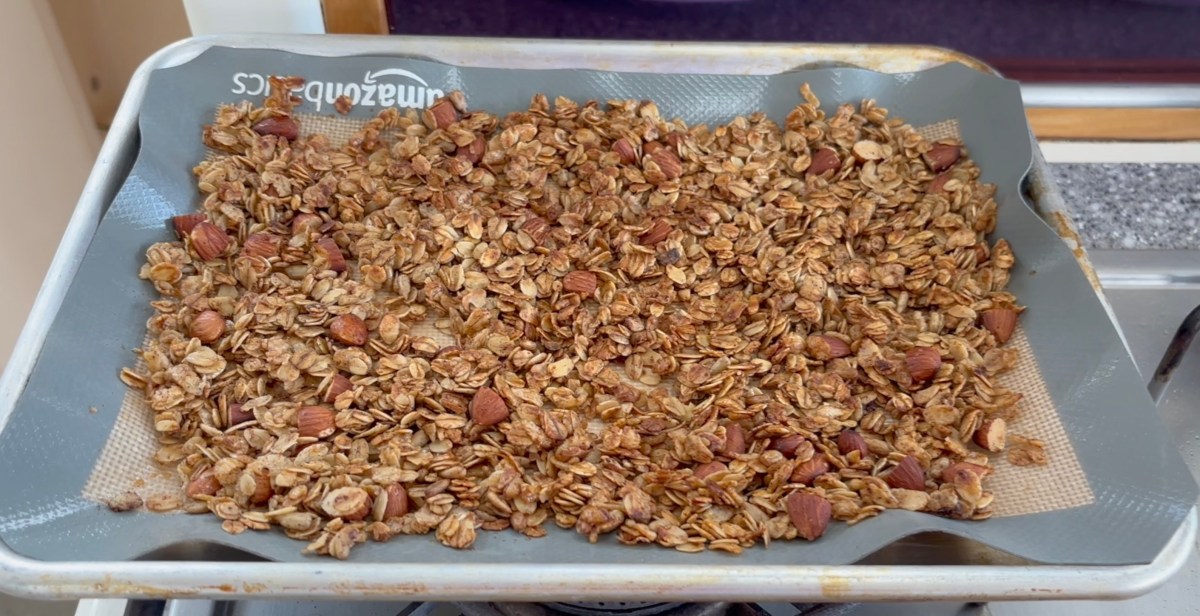
Okay, folks, this is our last day on Lady this year. Tomorrow we will pull into the boat yard’s harbor and move ourselves into the guest house. Lady gets hauled out for hurricane storage sometime in the next few days. We’ve been busy getting her prepped, and there’s more to do before we fly home Thursday, so I don’t have time to write much of a blog post. Instead, here’s a video in which I share the recipe I use to make granola onboard (complete with a blooper). If you want to know why I don’t just buy granola, you’ll have to watch the video. 😁
I will continue to post when I get home, because I have a bunch of stuff from this cruising season that I haven’t shared yet. Guaranteed I’ll post as consistently as I’ve been doing thus far this year. 😂
Until next time, stay safe and take care of each other!
Get comfy; this one is long. I threw in a few subtitles so you can scroll to pick & choose what you want to read.
It’s hard to believe we’ve been in St. Martin almost three weeks. As I wrote two weeks ago, our friend Ian was with us the first week here. Since then, time has been doing that thing where it seems to be racing by and slowly ticking along simultaneously. You know what I mean?
We stayed anchored in Marigot Bay for nine nights. It’s a busy harbor, so there’s lots of rolling during the day due to boat wakes, but it sure is convenient for getting places ashore. There is an excellent public dinghy dock on the bay side and another on the French side of the lagoon. From either, it’s a short walk to numerous stores and restaurants. Sometimes it’s a little too convenient, because we’ve eaten a lot of easily accessible croissants and baguettes. This country is not good for my waistline, but oh do the French know how to do pastry and bread! From where we anchored in Marigot Bay, it was also less than a 3-mile dinghy ride to the Dutch side. Visiting the Dutch side from the French side by dinghy or land transport does not require a passport nor clearing into the country. Convenient.
Our time in St. Martin has included some socializing with cruising friends, a little snorkeling, several shore excursions, and a lot of boat tasks, especially for Dave. The convenience of Marigot Bay made it easier for us to do the shore-based things we wanted and needed to do. When those items were ticked off the list, we popped up one bay to Friars Bay. It’s quieter, not busy, and less the 3 miles by dinghy back to Marigot should the need arise.
Shore excursions fell into the categories of meeting friends for meals, making purchases, and touring. We got in two dinners with our friends from Seas the Moment before they had to continue their journey to the Dominican Republic. Running into and spending time with them has been something we’ve looked forward to each cruising season. St. Martin boasts 4 very well stocked marine stores- Ile Marine on the French side, Budget Marine on the Dutch side, and an Island Water World on each side. We have made several stops for a variety of items we’ve needed for specific installation or repair jobs, plus some upgrades and replacements. We made three tourist excursions on the French side and two on the Dutch side, which I will write about separately.
Fort Louis
One day we made the less than ½ mile walk from the Marigot public dock up to Fort Louis for some great views of the surrounding area. Shore excursions like this always involve food ashore as well. After the fort, we went to our favorite bakery (photo at top of post). We split a scrumptious cinnamon roll and availed ourselves of their free WiFi to update apps and operating systems. That always takes longer than we think it will, so of course by the time we were done it was lunchtime and we “had to” eat ashore. We ate at one of the small restaurant stalls down at the Marigot Market. There’s a boardwalk of sorts lined with a dozen or more of these, each capable of seating maybe 30 people, all serving local fair with a variety of influences including Caribbean, Creole and French. It was a delicious way to conclude this trip ashore.
Pic Paradis and the AMuseum
Our second shore excursion on the French side required a rental car. We picked up our car around 9am. It was a bit of a beater, but perfect for the first part of our day when we took it up some precarious roads to within a ½ mile of the peak of Pic Paradis, the highest point on the French side of St. Martin. We hiked the last ½ mile to the summit for the views. Our first view was of two pairs of radio & cell phone towers surrounded by fencing with both razor and barbed wire. The nearer set was that demolished by hurricane Irma in 2017, the second set was the replacement. Hmmm… not very scenic. A narrow path around the fencing brought us to a small overlook of part of Marigot Bay to a bit north. Surely there was more than that? There was. A trail perpendicular to the pair of defunct towers led us to a better overlook. That view extended from Ile Pinel on the north end of Baie Orientale to the eastern part of Philipsburg on the Dutch side, on gthe south end of the island. If it had been a clearer day, we would have been able to see all the way to St. Bart’s. As it was, it was lovely, and we were thankful for the partial overcast; it kept it cooler. From Pic Paradis we drove around to French Quarter on the east side of the island to the Amuseum Naturalis, a free outdoor museum highlighting the nature and heritage of St. Martin. We had briefly visited it with Ian, but Dave & I wanted more time to explore it. It is well laid out with engaging signage that is both informative and succinct, and includes excellent photographs. The exhibits include local/endemic and invasive animal and plant species, a beautiful and well-labeled general garden, plus medicinal garden and more. We enjoy these kinds of exhibits and spent about 2 hours exploring. Unfortunately, the cloud cover was gone and it was ridiculously hot and humid. We were dripping sweat standing still reading signs. We ran out of energy partway through the medicinal plants exhibit and didn’t even get to the local poetry display. We dragged our soggy bodies back to the air conditioned car, sucked down more ice water, and went in search of lunch, which we found at a small place near Orient Beach. Nothing fancy, just paninis, but there was a breeze from both the sea and ceiling fans. Relief from the heat! Restored to full charge by lunch and more cool drinks, we set off back to Marigot and then on to the Dutch side to make our final provisioning run of the season. It was an enjoyable, productive and thoroughly exhausting day.
Excursions to the Dutch side
We made two land-based excursions to the Dutch side that did not involve marine stores. Our destinations were not accessible by dinghy, and were too far to walk to from the closest dinghy dock on the Dutch side. We could have taken a bus from Marigot, but had read that some of the buses, which are really 12-15 passenger minivans, were not all air conditioned. Marigot to Philipsburg, with traffic and stops, would have been about 45 minutes. That would be too long on a packed bus with no AC. We opted, instead, to dinghy just under 3 miles through the lagoon to the dinghy dock we’d used before in Simpson Bay (the town, not the actual bay). Then we asked a nice local which bus we should take to Philipsburg. Oddly, it was not one labeled Philipsburg, go figure. So, we crossed the street and flagged down the next bus labeled ‘Maho.’ It was air conditioned, and only a 15 minute ride- Yay! The ride was also cheap, just $2 USD per person each way, significantly cheaper than a taxi. Learning how to use public transportation on the islands takes a bit of work and tapping into local knowledge, but we find it more than worth the effort. Where were we heading? Keep reading.
This first Dutch side trip was to The Yoda Guy Movie Exhibit, created, curated and still run by Nick Maley. Nick worked on 50+ movies during his career doing creature creation and actor prosthetics before retiring to settle in the Caribbean. This is a specialty exhibit that pre-CGI SciFi movie geeks like me and Dave enjoy. Enjoy it we did! The exhibits mostly had to do with creatures and prosthetics created for movies Nick worked on, and models used in movies (some actual, some Nick recreated). There were also similar items from movies on which Nick did not work. But there was so much more- pages from scripts, samples of old contracts, comics based on movies, photos from movie sets, etc. It’s amazing how much he fit into such a small footprint. Nick also interspersed a few DVDs of himself explaining exhibits, plus interviews with others. The first big movie Nick worked on was Star Wars: The Empire Strikes Back. It is because of this work that he refers to himself as “The Yoda Guy.” He was one of a team of four whose job it was to create the Taunton, the Wampa, and, most importantly, Yoda. His favorite movie he worked on (we asked him) was Krull, which we now want to watch. The two things I most enjoyed about this exhibit were 1) we got to talk with Nick for quite a while, not only about movies, but also about cruising, because he used to do that too, and 2) the stories interspersed throughout the exhibit that only someone who was there could tell. Oh my goodness, I could go on and on about this place! I won’t do that, though, because I’d bore most of you more than I already do. Instead, here’s a link to the official web page for The Yoda Guy Movie Exhibit and Nick’s own web page. Moving on…
Another day, we repeated our dinghy/bus ride to Philipsburg, this time to visit the Sint Maarten Museum. This is a small, one floor, two room museum in a nondescript setting in what is otherwise a shopping and eatery area for cruise ship people. It was a gem, if, like me and Dave, you enjoy museums that tell you stories about the local history and culture. They did a nice job collecting and displaying items from various time periods- from the original Amerindian inhabitants through Dutch settlement of the area, the plantation period & industry of the island, abolition of slavery, plus a little about the natural environment and geology. I would have liked to have seen more individual items labeled, but there were informative signs that gave a general overview of each display. It didn’t take long to go through, and we followed it with lunch at a little restaurant on Old Street before our return trip to Lady.
A brief snorkel at the Arch
After nine days in Marigot Bay, and all of that land stuff, we needed a change of scenery. We hauled anchor one morning and cruised a mile south to Baie Rouge to snorkel through ‘The Arch,’ a natural rock arch at water level, and the surrounding point. Always hopeful, we’d heard there was great snorkeling. It wasn’t. The reef must have been amazing when it was alive, but all that remains now is the base structure, a bunch of algae growth and very little else. We swam out to a rock a little further out where we did see some coral regrowth and more fish. Maybe there’s hope for that reef yet. We did enjoy snorkeling through the arch, and we enjoyed lunch aboard Lady in the pretty anchorage. After lunch, we cruised back north to Friars Bay, one bay up from Marigot, where we have been for four days as I write this on Wednesday, May 22nd.
Boat tasks
Finally, boat tasks; they seem never ending. Many are the typical chores of laundry, cleaning and cooking. I do most of the laundry and cleaning; we split the cooking. Repairs and installations fall to Dave; I occasionally play a supporting role. Two such tasks were tended to since Ian departed.
First, for those of you who read my post about our holding tank woes, I am happy to report that we finally resolved the issue. As you may recall, our holding tank was backing up into our bilge when it got to just shy of being full. If you need more detail than this, you’ll have to go back and (re)read that post. According to the original Voyage boat drawings, all the hose connections Dave needed to see should have been accessible under the port aft companionway deck plate (that’s the removable floorboard at the bottom of the stairs on the left side of the boat). They weren’t. Even down on his belly with a bright flashlight Dave couldn’t see the connections well and certainly could not access them. They were under the floor of one or both port side heads. In each head there is a shower grate (big rectangle with draining holes) over a recessed area just above the bilge with a collection drain leading to a sump pump that pumps shower water overboard. Dave cut a 12” x 14” hole in the recessed floor of the port aft head so he could see into the bilge. Well, that gave him access to all the connections to the holding tank, but they weren’t the problem. Dang! Then he cut a similar hole in the forward head, our head. Bingo! There was a 5” or so crack in the ¼” thick fiberglass layer that creates the top of the holding tank. How the heck did a crack form inside? We’ll never know for sure, but some stress or sequence of stresses over time resulted in the crack forming and/or enlarging to the point where we noticed it this year. This is where I come in. Dave has become highly allergic to the hardener in 2-part epoxies, and this allergic reaction occurs in his lungs resulting in pneumonia-like symptoms. When diagnosed seven years ago, he was told that if he continued to work with epoxy, he would either need a lung transplant, or he’d die. Okay, time for Lisa to learn to work with epoxy. Dave routed out the area around the crack and set me up to do the epoxy-fiberglass work. I was nervous, because I’d only ever used epoxy alone to fill small holes. Under Dave’s tutelage, and his inspection of my first two layers of fiberglass (on a held breath) I knew I was doing okay. I put on a third layer, then set up the fan to blow from the companionway into the head and out its porthole so no fumes got inside while it cured for the next seven hours. Dave stayed in the cockpit until dinner time, at which point even I couldn’t detect any smell anymore (my nose being much more sensitive to such odors than Dave’s is). Two days later we filled the holding tank with sea water and watched. No leaking into the bilge- hooray! Dave took the opportunity to replace sixteen rusty hose clamps with brand new ones, installed an access plate in each hole he’d made in the heads, and replaced the shower grates. Now he has easy access to that area, should it be necessary in the future.
The next big task was/is an installation. Our freezer has always been inefficient and is now on its last legs. We ordered a new one from a store in Martinique in December and it met us in the USVI in late February, having been back ordered for a while. Since it was going to be a multi-day project that ended with our shutting off the freezer for at least one of those days, Dave opted to do it near the end of our cruise and in St. Martin where it’s easy to get the plumbing and wiring pieces he needed to do the installation. Buying the “freezer” included only the condenser, compressor, thermostat and cooling pump. Over the past three days, he has done some of the prep work by installing most of the plumbing and wiring elements. Sometime in the next week or so, once there’s less food in our freezer, he will finish the installation, which requires a new through-hull for the drain (through-hull = cutting a hole in the hull, this one above water line), and installing the condenser, compressor, thermostat, and cooling pump. That’s a lot of work in cramped, hot spaces for Dave. He’s a trooper. It’s just fortunate that he can do all this stuff, because if we had to hire someone to do the work, yikes $$$!
Sometime within the next two weeks we need to get to St. Kitt’s. We’re hoping for a good weather window but may have to settle for a less favorable one. Our one firm deadline this cruising season is hauling out in mid-June because we have stuff to do back home the latter part of the month. Our move to St. Kitt’s could happen as soon as this weekend, Memorial Day weekend.
UPDATE: We are in St. Kitt’s! A weather window presented itself yesterday, Saturday 5/25. It took us 12 hours from anchor up to anchor down, 2am-2pm, to travel the 60 nm. It was a decent passage. My apologies for posting this so long after I wrote it. Cell signal in St. Martin is abysmal and I couldn’t even upload a picture, let alone the slide show. Great signal here in St. Kitt’s, though, so I finished up today, Sunday 5/26.
Until next time, stay safe and take care of each other!
Yes, I’m talking about toilets. For you non-boaters, toilets on boats are referred to as “heads.” I’m sure there’s a history to that name, but I don’t feel like researching it right now. This is a post about the non-glorious side of cruising and it deals with toilets and holding tanks, so keep that in mind before you decide whether to keep reading.
Allow me to set the stage a little. Indigo Lady was a charter boat, and as such, she was set up with four sleeping cabins and four heads (head can refer to the toilet, or the bathroom in general). They were all manual pump toilets. That means that once you do your business, you have to pump a handle to empty out the “black water” (waste). On Indigo Lady, we can set a valve, per toilet, so that the black water either goes directly overboard or into the holding tanks. Our holding tanks are our keels, which are hollow and molded onto our hulls. When the heads are set to go into the holding tanks, those eventually fill up and we have to pump the entire holding tank overboard. When we bought Lady, this was also done manually, and usually required 100+ pumps. In U.S. coastal waters, emptying black water from holding tanks must be done no less than 3 miles offshore. On inland waterways, like the ICW (Intracoastal Waterway), there is no pumping overboard. Instead, one must go to a pump out station to have the tank emptied by suction, just like having a septic tank pumped at home, except it usually has to be done weekly and you have to keep a log (just in case an authority asks; nobody ever asked for ours).
When Dave converted Lady to solar electric, he also installed two electric flush toilets on the port side. Likewise, pumping out the holding tank on that side is electric. On the starboard side, Dave removed the forward toilet so we could put in a washing machine. The washing machine, being “gray water,” pumps directly overboard when it drains. The aft (rear) toilet and overboard pump out remain manual. We left starboard manual in case anything ever goes wrong with the electric heads on port. There are a couple of advantages to electric pump toilets. First, one doesn’t build up callouses by repeatedly using a pump handle. More importantly, to my mind anyway, the electric toilet pump has a macerator that grinds everything up, as does the pump to empty the holding tank overboard. This means that what gets dumped overboard is a slurry which break down faster. The manual pump toilets and overboard pump leave everything pretty much intact. How’s that for an image? You’re welcome. 💩
We keep Indigo Lady’s toilets set to empty into the holding tanks. In the coastal waters of New England, it’s really easy to get 3 miles offshore to pump out holding tanks, and pump out stations and pump out boats are also becoming more common. In the ICW, being a no discharge zone entirely, pump out stations are very common. The reality from the Bahamas to St. Kitt’s, where we’ve cruised thus far, is a little different. Pump out stations are either nonexistent or exceedingly rare. Here’s some more reality, down here nobody goes 3 miles offshore to pump out their holding tanks, and I’d wager that toilets of most cruisers and charterers, especially charterers, pump directly overboard with each flush. Those of us with holding tanks try to empty them in an open waterway where there’s good water flow, but if one gets pinned down in a particular anchorage for too many days, well, tanks have to be emptied. Courteous boaters will wait to do that until nightfall. Not everyone is courteous.
You’re still reading. I’m impressed. On to our current head issues…
Like I said earlier, we have Lady’s toilets set to flush into the holding tanks. Last Monday morning, I flushed the electric toilet like every other time. We’re used to a brief stink after a flush, especially as the tank gets more full. When we add to the tank, air gets pushed out through the vent hose to the outside of the hull. Depending on wind direction, the smell can blow back toward us. With this flush, however, the stink didn’t go away and it was stronger than usual. So, Dave lifted the bilge1 floorboard2 in the port aft companionway3. (If you need translation for that sentence, see the end of this post.) There was black water in our bilge. First, yuck! Second, that should NEVER happen. If a holding tank is full, the next flush is supposed to go directly overboard through the vent hose. Uh oh!
The exact order of things hat happened after that are a bit of a blur, but the first step was to run a bunch of sea water through the bilge to clean it out. (Each bilge has a pump that sends any accumulated water overboard.) Then we did a variety of things that included emptying the holding tank and flushing repeatedly while Dave used a flashlight in very tight places to try to see what was leaking. After we’d emptied the holding tank, flushing toilets did NOT put toilet water into the bilge. Dave could see nothing leaking on any hoses or connections (the ones he actually could see) when we flushed. 🤔 What we learned is that we have no idea why this is happening. So we did a fresh water rinse of the bilge with dish soap, followed by a bleach and water wipe down. Then Dave cleaned himself. No, he wasn’t covered in filth, but when dealing with sewage, better safe than sorry. Everything was fine again, until it wasn’t.
After 48 hours of using our head like normal, a flush backed up into the bilge again. We caught it earlier this time because we were checking after every flush, so it wasn’t quite as messy. More flushing and looking with a flashlight. Empty the tank again. We usually go about 8 days before needing to empty the tank. Why is it full after 48 hours? Do we have a leak in our keel that is allowing in sea water, thus filling the tank faster? How much did we fill the tank with sea water during out testing on Monday after we had pumped it out? A new round of troubleshooting still revealed nothing, but our tank was full, so we emptied it again. Then Dave set our toilet to pump directly overboard. He wanted to set the aft head to do the same, but those valves haven’t been moved since 2019, and they were stuck good. Fortunately, that head is rarely used except for when we have guests aboard.
Where does this leave us? Our head is pumping directly overboard, so it’s not contributing to the port holding tank. After 3 days of this, the level in that tank has not changed (we can tell by removing the vent cover to look in). This is very good news, because it means we don’t have a leak in our keel letting in sea water. If we’re ever in an anchorage where we think we should not be pumping directly overboard, we can either use the port aft head or the starboard head. Our guest, who arrives today, can use the port aft head, as long as we are able to pump out the holding tank every 2-3 days, otherwise he will use our head or the starboard one. I’m very thankful that we have heads on each side of the boat!
I’m sure that’s more than you ever wanted to know about marine heads. I aim to educate; it’s in my blood. 😁
I promise to return to writing about the more enjoyable parts of our travels, at least until something else inglorious arises. I want to keep it real.
Until next time, stay safe and take care of each other!
St. Kitt’s is our final stop this cruising season. We arrived on Monday, June 5th after a long, slow, bumpy ride from St. Bart’s. We wanted to stop at St. Kitt’s Marine Works to arrange a haul out date for Indigo Lady and clear into the country. Fortunately, Customs & Immigration are right there. We’d arrived too late to clear in that night, which was fine by us. All we had energy for was slinging the hammocks and we had no need to go ashore; we could wait until morning.
Here’s a little information about St. Kitt’s Marine Works. Most importantly, they certainly seem to know what they’re doing with respect to long term storage and, from Dave’s perusal of the yard, with respect to repair work. That’s good. Indigo Lady is probably in good hands here for the next 6 months. Their approximately 200’ x 400’ “harbor” is human made with two retaining walls of large boulders separating it from the open ocean. It contains a cement slip from which their travel lift hauls boats weighing up to 150 tons. There is also a smaller, wooden dock with several small, local fishing boats tied up to it, and a handful of mooring balls near the smaller retaining wall, near the harbor entrance. They are not a marina and there are no real amenities, although the boat yard does have a toilet and a shower. Boat owners can do their own work without any fee charged, which is kind of rare, and they can live aboard their boat while on the hard. One can also hire the Marine Works to do work to one’s boat and their fees are very reasonable.
The Marine Works allowed us to tie up to the outside of their travel lift dock the night we arrived at St. Kitt’s, and the following one as well. The prevailing sea conditions would have made it incredibly uncomfortable to anchor in any of the nearby, open roadstead anchorages. (For those unfamiliar with the term, it’s merely a spot off land that is shallow enough to drop an anchor, but there is nothing between you and the open ocean, except more ocean.) We would have had to travel another 3+ bumpy hours to get to a protected anchorage, which would have had us anchoring after sunset. Then we would have had to backtrack the next day to clear in and talk to the Marine Works folks. So we stayed on the Marine Works dock. We spent most of our time in the hammocks reading and napping. Long, bumpy cruises are exhausting. We cleared in the next morning. Dave talked to the boat yard manager to arrange the haul out and some work we wanted done to the boat. We arranged to be hauled out on Monday, June 12th. So what to do with the interceding five days?
At the end of the past two cruising seasons, we’ve done as much cleanup and hurricane storage prep as possible while at anchor. This ensures we’re always nose into the wind to keep us cool while we work, and we can also swim and cool off. So, on Wednesday morning we cruised about 12 nm down to the southeast peninsula of St. Kitt’s to the White House anchorage. It’s a quiet, lovely spot and we’d read there was decent snorkeling along the rocky shore. Each day we were there we would work from mid-morning until about 3pm, then we’d go for a snorkel, then swing in the hammocks reading and napping until dinner, followed by a movie before going to bed. We gave the boat a deep clean- airing out the mattress toppers and mattresses, vacuuming every nook and cranny, washing the walls with a vinegar solution, cleaning out every food storage location and inventorying what we have left for non-perishables. Dave has his own separate list of boat stuff that needs doing and started on that as well. I prepped our final meals so that when we were working on Lady in the boat yard, all we’d have to do was microwave lunch and dinner. It was tiring but rewarding. Then on Sunday afternoon, we hauled anchor and went back to the Marine Works to tie up to their cement dock again in preparation for being hauled out the next morning.
The travel lift came for us at 11am Monday morning. We stayed onboard while they lifted us out of the water, which is a strange feeling, being suspended in the air. They paused near the diesel pump so we could top off our tank. Then they drove us up into the yard where they power washed our hulls of the accumulated sea life that had grown there. They did a marvelous job! Then they brought us over to our storage spot in the field, lined us up, brought over the backhoe to finalize the dug trenches in which Lady’s keels would sit atop old tires, then they finally set us down. All told, we were suspended in Lady about four hours. I got a lot of organizing and packing done during that time. We were finally able to check into the guest house we had rented for our final few days buttoning up Lady while on the hard. Thankfully it’s only 0.1 mile from our boat’s location, because it took us two trips to bring everything we needed to have up there. We were beat! We hadn’t done much work that day, but the prior five days of work, plus the underlying stress of knowing the boat was going to be hauled onto land got to us. We were a waste of space after we settled in at the guest house. We were in bed by 8:00pm and sound asleep by 8:05!
Over the next two days we spent long hours finishing our boat closeup tasks. For Dave, that was a lot of time working in the blazing heat and sun on, in, and under Indigo Lady. I spent a lot of time doing laundry up at the guest house, interspersed with stowing our clothes, bedding, etc., onboard. A big downside of St. Kitt’s is that they burn trash on the island. St. Kitt’s Marine Works is downwind of this. It also hasn’t rained much here, so everything is dry and brown, and the persistent trade winds blow dirt and dust around. This complicated the cleaning and closing process. It would have been impossible to do the necessary work without having the hatches and portholes open. Sadly, it didn’t take long for the dirt and dust to find its way inside, despite all our screens, and onto every surface. So much for all that deep cleaning we’d done earlier. We did what we could to rectify it. It was hot, sweaty work, but we made good time. By Thursday, we had only about an hour’s worth of stuff to do, mostly stowing final items, and retrieving others we needed to bring home with us. Friday morning required only a quick trip to Lady to return stuff we had used while at the guesthouse. Then we locked her up and bid her farewell until January.
Although we had almost all of Thursday to ourselves with no work to do, we lacked the energy to explore the island. It is horrendously hot and humid down here and it is horribly uncomfortable to be out of the breeze for more than 5 minutes. It takes less time than that to start sweating. I would sweat standing at the sink in front of the open window while washing dishes! Rather than exhaust ourselves tramping around the area in the heat, we holed up in the guest house with a fan pointing at each of us. I won’t lie, I was a bit bored, but that was preferable to being outside. Hopefully January will be a bit cooler, and we can take a few days to explore on land.
I’m writing this on Thursday from the guest house. Friday we should have flown from St. Kitt’s to San Juan, then from San Juan to Boston. From there taken the bus to the C&J Trailways station where we picked up our car, which my folks had delivered there for us, and driven home. We should have been in our own bed by 2:00am. That was the plan, at least. Next time, I’ll let you know how it went. Until then, stay safe and take care of each other!
Although I’m sure you prefer reading about the beautiful side of our liveaboard experience, I feel an occasional dose of the messy side is warranted. So today I will regale you with rotten potatoes and some other recent unpleasantness. I may as well condense the recent sob stories into a single post and get it all done at once.
The potato saga…
Dave mounted five wire baskets in the starboard, forward companionway to allow for more food storage. I refer to this as our ‘pantry.’ Three of these baskets are dedicated to produce that keeps well without refrigeration. This includes citrus, apples, potatoes, cabbage, and an occasional butternut squash or underripe tomatoes. The wire bottoms are padded with a piece of foam from some part we had shipped once, and the sides are lined with that cheap shelf liner stuff people use in drawers or to prevent items from sliding around on counters. This prevents produce from becoming damaged from the pressure of the wires, especially if we’re under way and bouncing around. While at home on land I will buy less than beautiful produce- a bruise or blemish here or there, but that won’t do onboard if I want it to last as long as possible. I wrap each piece of citrus in aluminum foil. I cover other produce with a light cotton towel, and I have mounted a small fan over the baskets that I can use to circulate air every once in awhile. I keep apples, citrus and potatoes in separate baskets so they don’t impact each other’s ripening. I check and rotate individual pieces, though probably not as frequently as I should. Yet despite all these efforts, something still goes bad on occasion, like the two red potatoes this past week.
Saturday morning, May 14th, Dave was working on troubleshooting the starboard generator and asked me to get a tool for him in the workshop. As I passed the ‘pantry’ to do this, I smelled something off. That can’t be good. I delivered the tool then checked the baskets. Yup, two red potatoes had started oozing to the point where some of it dripped down onto the packaged items in the two baskets below. It stunk! Over the next 1.5 hours I emptied out the potato basket, putting the two offending spuds in the sink and checking the others for contamination then set them aside. I dutifully chopped the rotten spuds into tiny bits, rinsing the gooey parts down the drain (and therefore overboard) but put the diced bits in our compost container. We dump that when we’re offshore, not in enclosed bays like the one we were in. I then proceeded to empty the two lower baskets, spraying each package with a vinegar-water solution then wiping them down and laying them aside to completely dry. I removed the basket liner and soaked it in soapy water in the sink, then hung it on the lifelines to get a few days of rain/sun before seeing if they’re usable because they still smelled after their soapy soak. Then I sprayed and wiped each of the three impacted baskets plus the surrounding wall and floor and let them air dry before returning items to them. The potato basket is temporarily lined with towels until I can reclaim or replace the other lining material. And just like that- poof- a good portion of the morning lost to rotten potatoes.
Now for the additional unpleasantness…
The above happened the morning after we arrived in Hatchet Bay, Eleuthera. Just before sunrise the prior morning, Friday the 13th, we departed our quiet anchorage on the west side of Current Settlement on the south end of North Eleuthera to pass through Current Cut to the sound beyond and a 17 nm trek to Hatchet Bay. It wasn’t pretty. The seas were much worse than forecast. This happens to us a lot when we’re traveling on inner, shallow bays like this part of Exuma Sound. It doesn’t help that wave forecasts are really meant for open ocean, but one has to add local conditions to the estimates and we’re still not good at that. We were in mostly 6’ seas just off our starboard bow with very short period. Read that as very bumpy. Our bows were washed over many times. The wind was also pretty much just off our nose at about 17-20 kts. We were making about 3 kts of speed. Dave changed our course to bring us within ¼ mile of shore where the water stayed deep right up to the rock cliffs and closer to the point we were heading for. This cut down the seas to about 4-5’ feet and gave us a slightly better angle so we were bouncing around less and not washing our bows for about 1/3 of the trip. We were about 1.5 nm from the entrance to Hatchet Bay and had to turn into those seas and winds to get around the point that precedes the entrance. At the same time, a rainless squall kicked up the winds to about 30 kts and the seas to 6-8’. Now we were making about 2 kts. Two catamarans passed us en route to the same safe haven of Hatchet Bay. Dave was very glad they did, because he got to watch them maneuver to enter the very narrow, 50-60’ wide, cliff-lined cut into the bay. Following their example, he passed the entrance a bit, turned to line us up with it, and slowly steered us through with the seas pushing us from behind. As soon as we were through the cut, the bay was practically flat. Salvation! We were anchored by around 12:30pm and were thinking about lunch when we realized we had a mess to clean up. We had forgotten to close the portholes! The rough seas from starboard splashed water all over the aft cabin on that side. So we spent 45 minutes removing, drying, rinsing, wiping. Ugh! We were beat! We had a simple lunch of sandwiches and spent the rest of the afternoon in the hammocks; rum was involved, and a virtual (Zoom) sundowner meeting with our boat club. We had leftovers for dinner and managed a movie before crashing for the night. Only we didn’t sleep well…
First of all, the restaurant/bar we were anchored in front of played loud music until well after midnight. On top of that, the wind was very gusty. A nice steady wind makes for comfortable, peaceful sleeping, but gusts interrupt our sleep by triggering the part of our boater brains that registers changes that may need our attention. Then, at some point in the wee hours of the morning it started raining. I think I got up 3 or 4 times that night to check our anchor circle and the boats around us, closing hatches, lowering our hatch a bit to cut down on the gusts, closing it for rain, reopening it for airflow. So much for sleep!
I’ll end this diatribe by bringing it full circle. To do that, I need to back up to Thursday the 12th. After one and a half weeks of delay in Spanish Wells and over $400 in shipping fees, the generator part we had been waiting for finally arrived. Dave installed it Thursday evening at our Current Settlement anchorage, the day before we left for Hatchet Bay. The part did not solve the problem, so we still have a non-functioning starboard generator. Dave was troubleshooting the wiring of said generator Saturday morning when he asked for that part that led me to discover the rotten potatoes. There you go, full circle.
I promise my next post will be about something more pleasant. We did a couple of very fun things while at Hatchet Bay, so stay tuned!
Until then, stay safe and take care of each other.
We’re still home. We hope to be able to return to Lady in early April; fingers crossed. Until then, I plan to post once a month.
This month is a flashback to this past July when we were in the Bahamas and I had the idea that it might amuse you to see how I do laundry on Indigo Lady. At this point you’re either going to keep reading and then watch the video, or close your browser and wait for my next post. I won’t be offended if you opt for the latter.
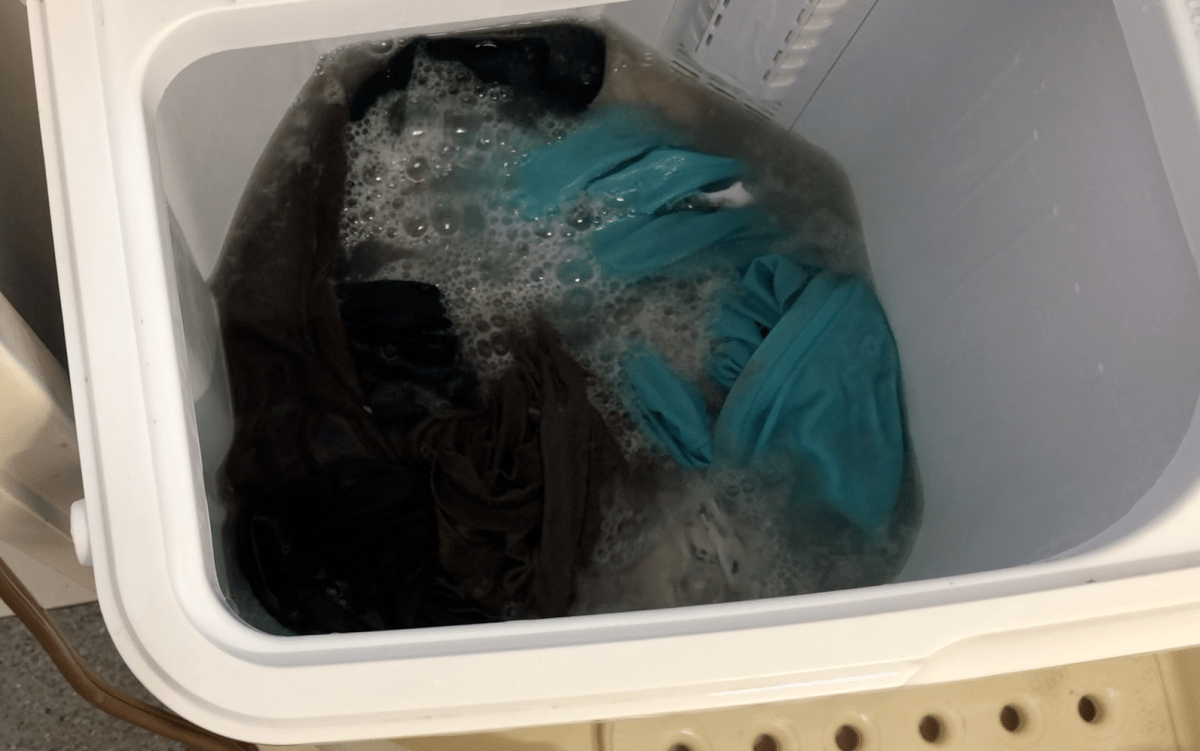
Doing laundry on the boat requires some planning. It takes more of my time and attention, and it requires the right timing and weather conditions. Unlike doing laundry at home, I cannot just load the washing machine, go do something else for an hour, switch to the dryer and leave the dried load there until I need the dryer again. Washing the laundry onboard requires my full attention for 60-90 minutes per load, or at least setting timers so I don’t forget what I’m doing. Then there’s the fact that our “dryer” is the sun. The whole process needs to happen during daylight hours on a single day so everything is dry before the sun goes down.
These are my basic criteria.
We need to have enough fresh water in our tanks or I need to do laundry when we’re running the water maker. Each load uses about 20 gallons (maybe someday I’ll actually measure this). Our tanks hold 160 gallons.
I need a sunny morning and afternoon, preferably with a breeze but not a big wind. Less than 10 kts of wind is preferable, though sometimes I don’t have much of a choice. The more wind, the more clothespins I need to use and the more I worry that something will blow overboard (it’s happened).
I like to start around 9 or 10 am, especially if I have to do more than one load. Even if rain isn’t forecast, there can still be showers in the late afternoon/early evening due to local heating/cooling cycles, so I want the laundry dry and back inside by then.
This video demonstrates the actual process of doing laundry with our setup. I squeezed it into 2.5 minutes thanks to iMovie’s speed feature. If I left out anything you’re wondering about, ask in the comments.




 Life on Lady