St. Bart’s

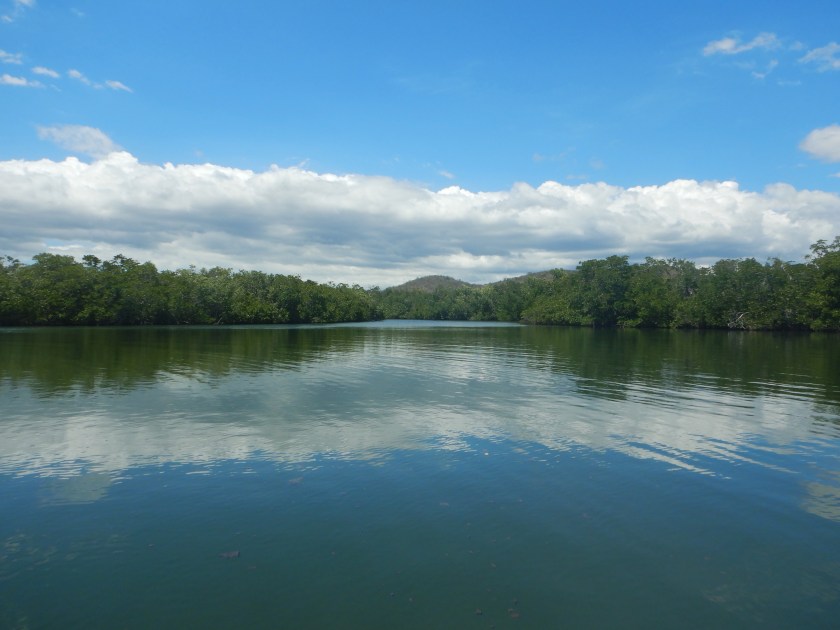
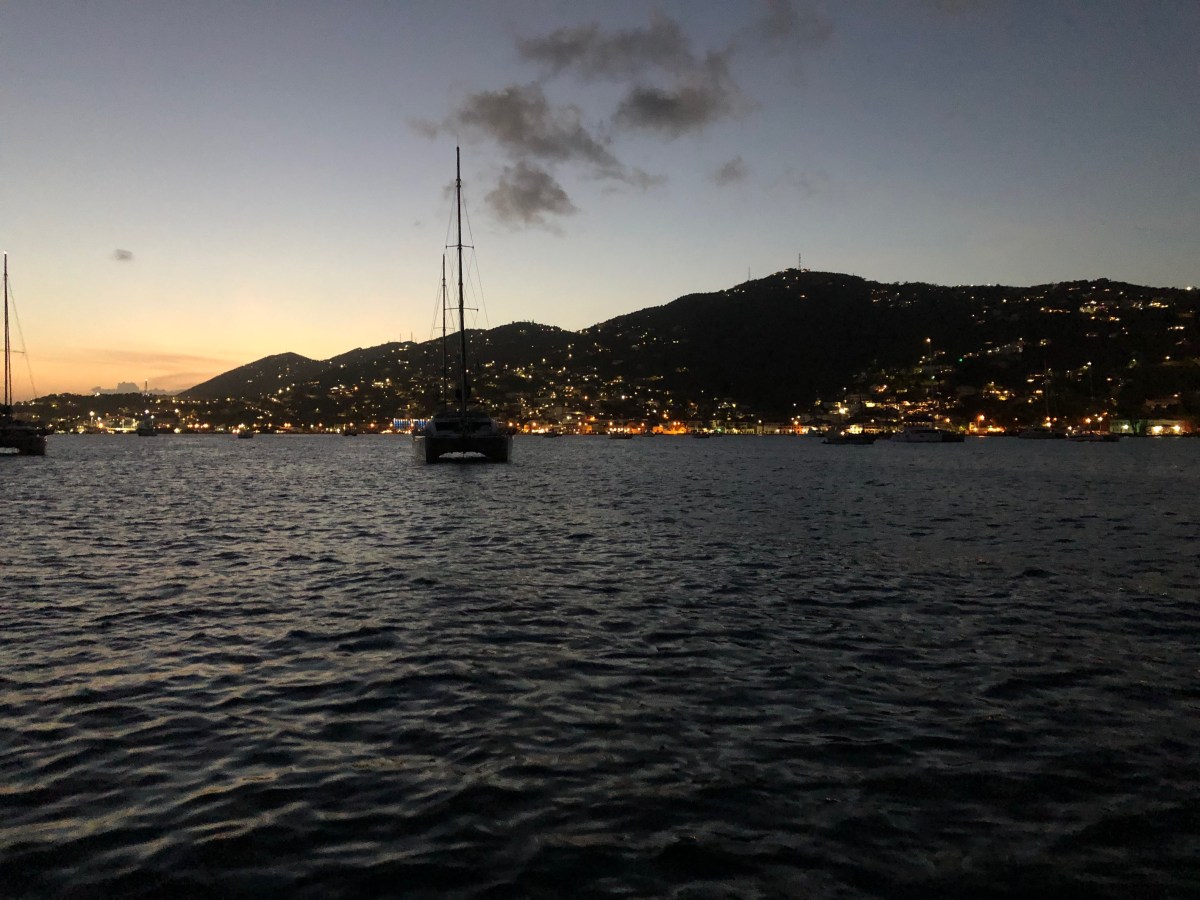
The three buddy boats had a fair cruise to St. Bart’s on May 26th. We had somewhat confused seas but managed to make about 4.5 kts. We caught the lee of St. Bart’s for the final 45 minutes of the trip, so that was nice, and we were anchored in Gustavia Harbor by 1:30pm. It is a crowded and deep anchorage; we were in 40’ of water and had to put out 160’ of chain!

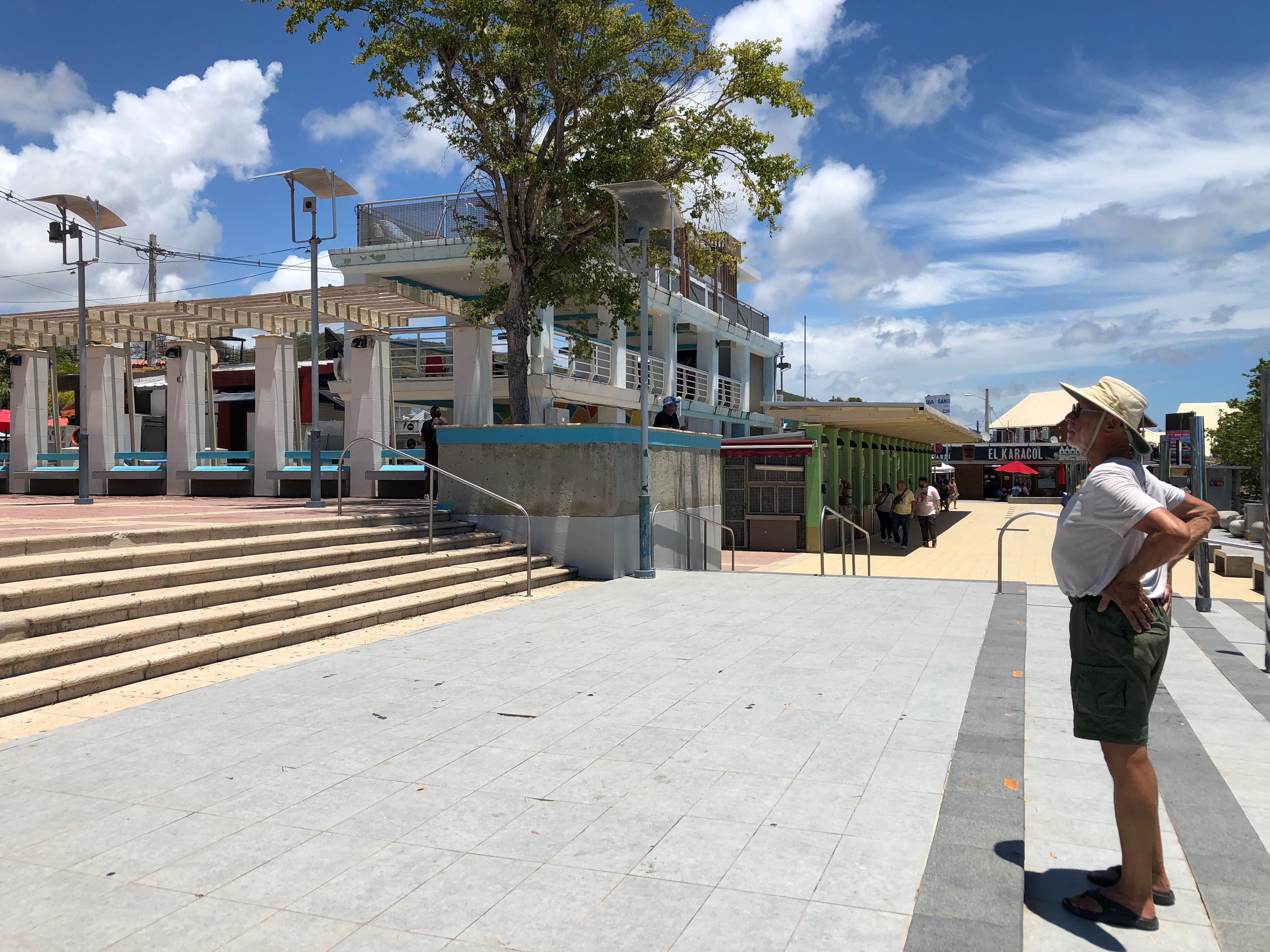
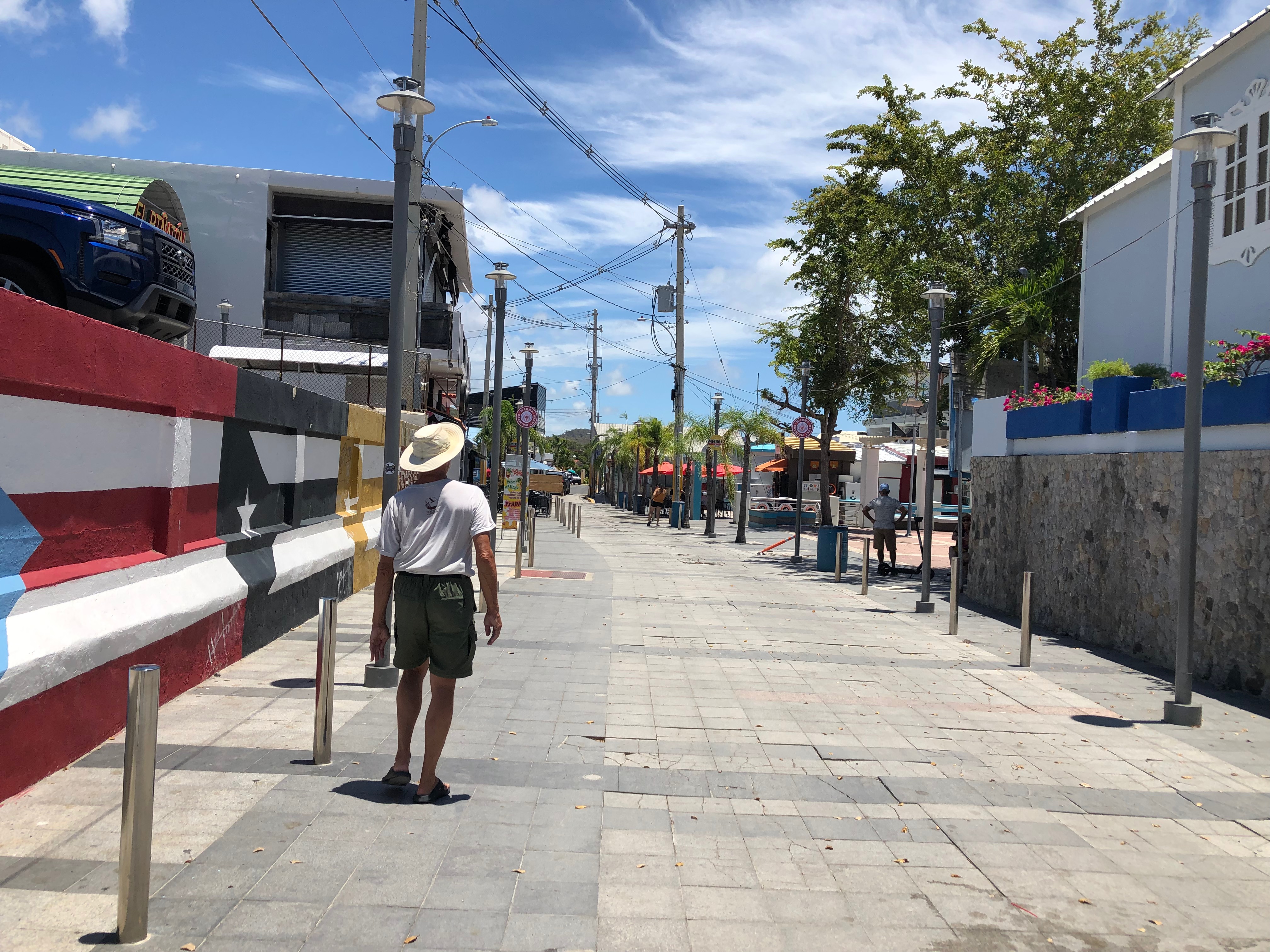
The boys dinghied into Customs to clear us all into the country and were back by 2:30pm. We stayed aboard until 5:00pm when we all went ashore to walk around and find dinner. If St. Martin is the “friendly island” (it was), St. Bart’s is the expensive one. Aye caramba! The entire waterfront area was filled with high end boutique shops and pricey restaurants. Our “inexpensive” dinner- two mahi burgers with crappy French fries, two beers and a bottle of water (tap water not served)- ended up costing us over $60! We returned to our boats for the worst night ever in an anchorage! There were 3-4’ waves rolling in all night long, tossing us around and slamming our hulls as if we were underway on a bad travel day. None of us slept much and we got to *pay* for the privilege, 20€ a night! The next morning, we hauled anchor and hauled ass out of Gustavia Harbor and headed a few miles north to the much calmer Columbier Bay, arriving by 10:00am. This is part of the marine park and has a couple dozen mooring balls one can pick up for all of 4€/night. You can also anchor in the middle of the bay for the same price, but why anchor when you can pick up a ball?

We were in our final two days with our buddy boats. Come Monday morning we would be parting ways as they continued their journey toward Grenada for hurricane season and we moved to St. Kitt’s to be hauled out. So we snorkeled together a couple of times, walked the beach and part of a trail toward another town, had a pot luck dinner on Indigo Lady Saturday night, and on Sunday a final round of afternoon of drinks and camaraderie. Victoria wrote us a poem that made the three ladies teary-eyed. Eventually, we couldn’t put off the inevitable any longer. It was time to part. We bid farewell to Andrea, Barry, Mike, Victoria and Ocean with hugs and tears 😥. The only slight consolation is that we plan to meet up in St. Bart’s or St. Martin next winter. It didn’t make it any less gut-wrenching to say goodbye, though. We had spent almost every day together since we met in Luperon the first week of April (it may have actually been the final days of March). The bonds of friendship form quickly when spending that much time together. We are so glad to have made new life-long friends! 

Monday morning dawned and Caretta and Wild Horses were no longer in the mooring field. They had set off for Antigua at 4:00am. It felt a little lonely. Actually, mostly I felt exhausted and feverish. It took almost 3.5 years, but COVID finally found me in St. Bart’s. 😠  When I went to bed Sunday night, I had a slight fever, which got higher (100.6) as the night progressed, and I had the chills. So at 11:30pm Sunday, I pulled out one of the COVID test kits we had brought with us. Took all of 30 seconds to show positive. Damn! I texted our buddy boats so they could watch for symptoms. Despite the six of us having gone everywhere together for the preceding week, thankfully I was the only one to get sick. The first morning, Dave set up the spare cabin and he used that and the associated head while I stayed in ours. The trade winds blow constantly, so we have complete air exchange through the boat all day and night, not that we spend much time inside other than when we’re sleeping. So even Dave managed to avoid contracting the Vid. Phew! My fever only lasted three days, though not as high as the first night. Otherwise I felt like I had a mild cold. I was completely exhausted for one day. It was the kind of exhaustion where standing up takes too much energy, but thankfully that didn’t last. 

Since we didn’t know whether or not Dave would develop symptoms, we decided to stay put in St. Bart’s until I felt better and we knew Dave’s status. We were also better positioned for medical help, should either of us need it, which we thankfully did not. I laid low for a few days, spending most of my time in my hammock reading. I did a little laundry, with Dave’s help. By Thursday I felt well enough to snorkel. We took Indigo Lady a couple of miles north to the Ile Forchue anchorage, also part of the marine park, where we snorkeled for about 30 minutes before returning to our hammocks. We popped back over to the Columbier anchorage for the night, though. On Saturday we dinghied ashore and walked about 30 minutes across the island toward Flamands Beach. We stopped at Petit Anse, a tiny, rocky beach about ½ mile from Flamands, to cool our tootsies in the water, then we walked back to Columbier Beach. 

I was feeling better, though still had the annoying post-nasal drip, so we could move on to St. Kitt’s when the weather allowed and it looked like Monday, June 5th would be that day. In the late morning of Sunday we dinghied the 2.5 miles to the town of Gustavia to clear out of the country. It was a very bumpy dinghy ride over big waves. It was worse going in than returning. On the return we got to surf the waves. Fortunately, Dave is very good at reading the seas, so he got us there and back safely. 

We dropped the mooring ball at 7:00am Monday morning and made the 35 nm trek to St. Kitt’s. It was a long, slow, bumpy ride all the way for 9 hours at only about 3.75 kts. Fortunately, we arrived safely. St. Kitt’s is where I will pick up next time. Until then, stay safe and take care of each other.

P.S.- I wrote this in St. Kitt’s. I still have the annoying post-nasal drip and still tested positive for COVID after 10 full days. Otherwise, I’m feeling fine. Indigo Lady will be hauled out Monday, June 12th and we fly home Friday the 16th. My next post will either be this Wednesday, or after we get home to NH.

We fell in love with St. Martin!

The three buddy boats departed the USVI at 10am on Tuesday, May 16, for the 95 nm run to St. Martin, our last overnight passage this season. It was a bit bumpy for a while once we cleared the protection of the BVI land masses. There wasn’t a lot of slamming, fortunately, just rolling in confused seas. Those eventually settled to the wind and a single wave set, on our nose, of course. From there on out the trip was uneventful, and though our bows got an occasional light splash, we never buried them. We averaged just over 4 kts while we were in the current, over 5 kts when not in the current, and only dropping to 4 kts when we had to clear our propellers of sargassum. Making a night passage with buddy boats is wonderful! It’s nice to know there’s company, or help in a pinch, but it’s also just fun to enjoy a little radio chatter on those long, dark night watches 😊. 

We were all anchored in Marigot Bay, on the French side of St. Martin, by 7am. We couldn’t check into the country until 8am, so we had a little time to tidy up, run up our Q-flags, and rest. St. Martin is the smallest, two-nation island. Two-thirds of it is French and the other third is Dutch. For cruisers, checking in on the French side is easy and free, so that’s what we did. Once cleared in, one is free to cross between the French and Dutch sides by land or by dinghy at no cost and without needing to present a passport. So, at 8am we loaded into our dinghies and went to Ile Marine, a local marine store, to use their check-in computer. Once we figured out the non-qwerty keyboard and the French names for countries and anchorages, with the help of the nice man behind the counter, we were in! We continued into town for a walk about and breakfast. We found a lovely restaurant that specializes in eggs benedict, but I opted for the French breakfast of half baguette with butter and jam, croissant, fruit juice and tea. Welcome to St. Martin! Then we did walk about a bit so Caretta and Wild Horses could buy local cell plans before returning to our boats to rest after the long passage.

We spent seven nights at anchor in Marigot Bay, off the town of Marigot. It provides very easy access to restaurants, shops, groceries, and more, all within easy walking distance. It is also a short dinghy ride through an interior lagoon to get to the Dutch side. We filled our days with boat chores, rest, socializing & trip planning on Indigo Lady, and trips ashore for fun, food and provisions. Dave and Barry assisted Mike on Wild Horses in diagnosing some ongoing electrical issues he’d been having. They put their heads together, and after a couple of marathon sessions, were finally rewarded with solutions. Mike and Victoria took everyone out for breakfast one morning as a thank you. So sweet! I indulged in too many croissants and baguettes during our stay, but oh were they good! We went ashore after dinner one night for drinks (and for some of us, dessert) and live music at a restaurant Mike & Victoria had found. It was two guys, one on harmonica and one on electric guitar, doing an amazing job covering a bunch of familiar American tunes, as well as some French ones we did not know. They were full of energy and we enjoyed ourselves very much! We dinghied to the Dutch side to a couple of marine stores one time. Another time we took our dinghies through the lagoon to the Dutch side and out into the open ocean on the south side of the island. We were hoping to land at a beach bar where folks watched people line up at the end of the airport runway and get blown around by the engines when the jets took off. We braved the big waves only to find there was no safe way to land on the beach. Oops! So back we went through the big waves and into the lagoon. At that point we really needed drinks, so we stopped at the Dinghy Dock Bar & Restaurant for snacks and libations. Fun place!

Perhaps the most fun activity we engaged in was an escape room. I discovered that there is one on the Dutch side of the island, housed at the Dutch Blonde Beach Bar. When I ran the idea past our buddy boats they were all in! So I set it up (once I learned they allowed dogs). The real trick was getting there, because we couldn’t take the big boats and it was too far to dinghy or even to dinghy part way and then walk. So I called Dutch Blonde and got the owner, Sunil, and asked if he had any ideas. When I told him we were concerned about public transit with a big dog, he offered to drive us for only $40 round trip for our whole crew plus Ocean. Sweet! Sunil met us in Marigot with his 9-passenger van on a Saturday afternoon. What a great guy! Between the trip there and back he gave us a narrated tour, plus history and politics of the Dutch side. He even stopped at a scenic vista so we could take pictures. He also told us the story of how he ended up in St. Maarten (spelling for the Dutch side) owning a brewery (with no past experience) and opening a restaurant/bar with escape rooms. He knows how to tell a good story.

The escape room was awesome! We were captives on a pirate ship and had one chance to escape while the pirates were ashore plundering and pillaging. We did not succeed in escaping (we got close), but we had a blast trying! This one was challenging. There were three rooms to get through with lots of locked things to open and fun puzzles to solve. Only Victoria and I had ever done an escape room before; the rest were newbies but got right into it. It was fun to see how everyone gravitated to certain tasks. We had so much fun, we were barely bummed that we didn’t successfully complete it. At the end, the guy who resets the rooms let us ask questions about the parts we didn’t finish so we could see the whole picture. I look forward to coming back next season to try another room!

After the escape room, we stayed for drinks and an early dinner. They make amazing, Thai-inspired tacos that we all enjoyed. I had a pina colada, but everyone else enjoyed the locally brewed beer. Sunil chatted with us for a bit, and even shared a shot with us of some yummy, fruity thing his bartender concocted for us- on the house! Then it was time for Sunil to bring us back to Marigot. We left him with hugs and much thanks.

Before departing St. Martin, we wanted to sample another anchorage for a couple of nights, but there was nowhere to clear out of the country from our intended anchorage. We inquired at Ile Marine about clearing out a couple of days early with post-dated departure papers. They said it was no problem. So after a delicious lunch ashore on Wednesday, May 24th, we went back to Ile Marine to clear out and get our papers post-dated for the 26th, our intended departure date. Then we all hauled anchor and headed north to Grand Case Bay. The next day, everyone climbed aboard Indigo Lady and we cruised a little over a mile to a dive mooring at Creole Rock for lunch and a snorkel. There were lots of rocks, very few sponges or corals, but tons of schooling sargent majors! Dave & I saw one sea turtle. Andrea and Barry saw a spotted eagle ray. Mike, Victoria, Andrea and Barry saw an octopus that Barry noticed. Bummed I missed that one! 

We wrapped up our stay at St. Martin with drinks on Indigo Lady followed by a final dinner ashore for some great barbecue. We had only sampled what St. Martin has to offer, and we know there is so much more to enjoy next season. For now, this would have to do. The next day, we would all depart for St. Barthélemy (St. Bart’s), which is where I will pick up next time. Until then, stay safe and take care of each other!
The U.S. Virgin Islands

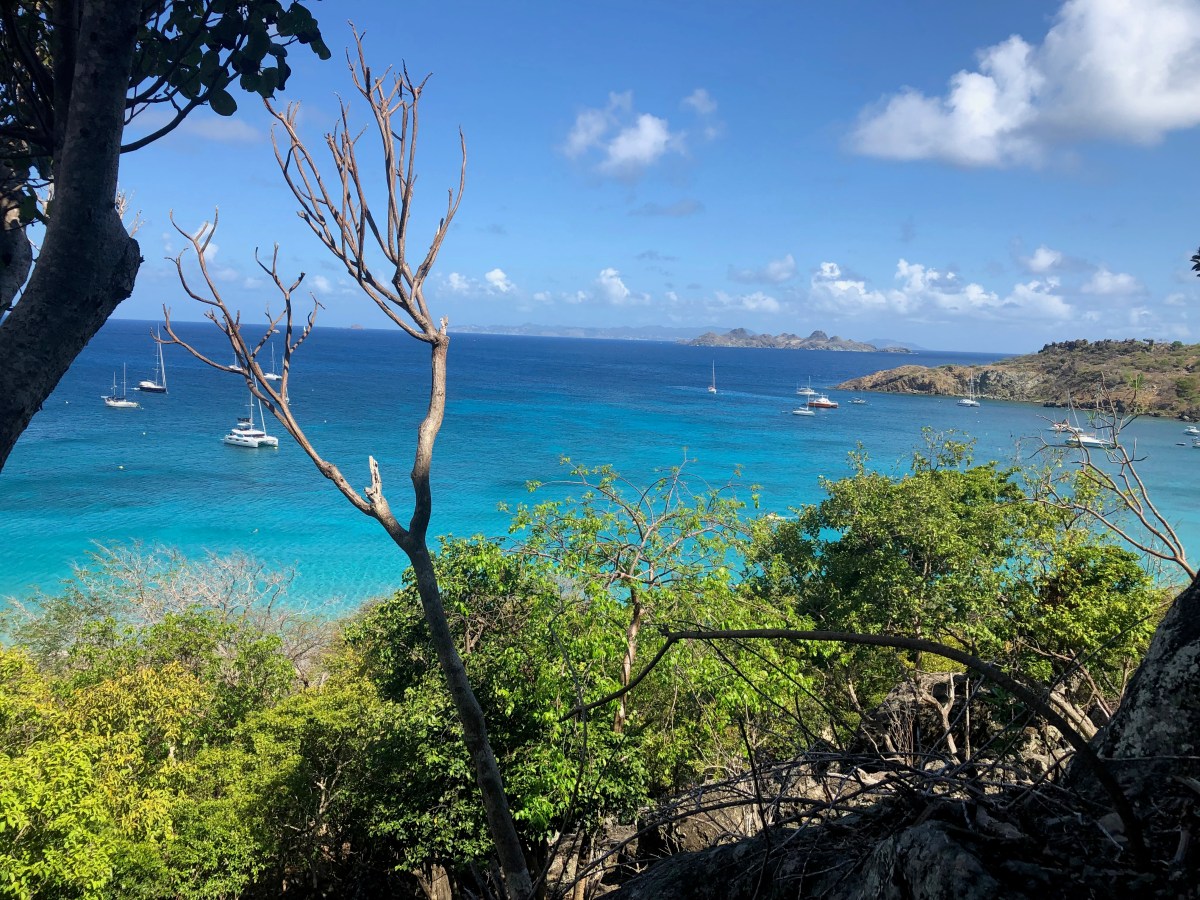
From Culebra, Puerto Rico, we and our two buddy boats, Caretta and Wild Horses, set off for the U.S. Virgin Islands on May 6th. We were anchored in Brewer’s Bay, St. Thomas, USVI by 2:30pm. Dave & I were able to go almost halfway on solar & battery, but it got bumpy so we had to cave in and turn on the generator. It’s a lovely little bay that I look forward to exploring more next season. This time around, it was just a one-night stopover. We all gathered on Wild Horses for drinks and trip planning that afternoon. We decided to brave any potential cruise ships and check out Charlotte Amalie for a day.

It was a short 6.5 nm jump to Long Bay outside Charlotte Amalie. This is the very bay in which we anchored Indigo Lady back in 2014 after we bought her. We did our provisioning from here. It was a long time ago, and I was very focused on provisioning, but a few things did ring my memory bells when we went ashore this time. First, we used the yacht club’s dinghy dock, just like we did back in 2014. I recognized the building. The cabanas where our signature boat drink, the Indigo Lady, was born are still behind said yacht club. Unfortunately, they were closed while we were ashore this time. I also recognized historic Charlotte Amalie because of the cobblestone alleys and stone-faced buildings (made from ship ballast). All the boat buddies bopped around the historic part of town for a bit. It’s pretty, architecturally, but there’s nothing there but shops and restaurants. When a cruise ship is in, this place is jam packed! The one cruise ship that had been slated to be in port this particular day had canceled, so most of the shops and some of the restaurants were closed. No worries, it only takes one restaurant to feed us, and we found one with a lovely breeze. It was an abysmally hot day, so we all returned to our boats and the breeze after only about three hours ashore.

Our next stop was Christmas Cove at Great St. James Island where we would stay for four nights. Caretta picked up the last free mooring ball and Wild Horses anchored. We were just about to make a second attempt to set anchor ourselves when a mooring ball opened up. Score! We took it. It was right next to the pizza boat. Yes, I said pizza boat. Pizza Pi is owned and run by a young man from New England (MA and NH). Small world. Brilliant idea for a restaurant! We all called in our pizza order early in the day to ensure Pizza Pi could accommodate (if they get too many orders, they stop taking them). The buddies came over for drinks, and at our 5pm pick up time, the boys dinghied over to collect our Pies. Delicious! It was a lovely way to celebrate our anniversary. 

It was a leisurely paced few days at Christmas Cove. We all caught up on boat chores. I did some baking and caught up on my blog and sorting photos. The boys dinghied the 3 miles or so to Benner Bay to Budget Marine. Everybody needed something for their boat. Dave came back with four solar vents for our cabin hatches. Now we’ll have more airflow when she’s closed up and on the hard during hurricane season. We all did some pretty nice snorkeling right off our boats. Fish Cay, really a big rock, sits in the middle of the cove and has quite a lot of fish. Our friends on Bitty Rose arrived our last day there and invited everyone for drinks that evening. It was another fabulous night with friends!

From Christmas Cove we moved to Cruz Bay on St. John. Caretta was in the lead and reported back that there didn’t appear to be any room to anchor, so we went north around the point to Caneel Bay where there were dozens of National Park mooring balls open. Score! Two thirds of St. John is National Park, including the waters. There are only a couple of places, all on the south side of the island, where one can actually drop an anchor, everywhere else you have to pick up and pay for a mooring ball. Day use is free; overnight is $26/night. Dave bought a lifetime National Park pass back in Puerto Rico, so we got ½ price off the mooring balls. Woo hoo! Our little caravan picked up three balls in a row on the north end of the bay. From there it was an easy 1.5nm dinghy ride into the town of Cruz Bay where they have a lovely dinghy dock available. Cruise ships don’t come to St. John, but passengers can make a day trip by ferry to the island. Like all such places, the waterfront is all shops and restaurants. We enjoyed bopping around and looking and we found good food for lunch. There is a wonderful supermarket a short distance up the hill where we were able to restock our rum supply inexpensively. On the dinghy ride into town we’d seen our friends on s/v Bye Felicia at the south end of the mooring field. We’d pulled the dinghies over to chat and invited them for drinks in the afternoon. So that evening we had everyone onboard, plus two dogs. Bye Felicia’s adorable Yorkie puppy, Rex, is in love with Ocean. They are so cute together. Rex is about as big as Ocean’s snout!

The next day our boat buddies boarded Indigo Lady and went to Mingo Island for a snorkel/dive on another wall. Our friend Matt on Bye Felicia used to live here and knew of a single mooring ball right over the reef that we could pick up. He said it was worth it and he was right! It was a lovely dive with still a good amount of healthy coral and tons of fish. The following day was a low key day. Dave and I donned our snorkel gear in the afternoon and swam toward the shore and along the beach, surprised that there were lots of fish among the rocks, including a bunch of big parrotfish and a zillion wee fish, likely recently hatched. We had everyone over for homemade pizza that night, and Mike & Victoria brought leftover fried chicken they’d bought ashore.

We wanted to head to Coral Harbor on the east end of St. John to stage for an overnight passage to St. Martin. The only place on the island to clear out with customs, however, was in Cruz Bay. On one of their trips ashore with Ocean, Mike and Victoria checked with customs in Cruz Bay who told them there was no problem clearing out 48 hours ahead of time. So that’s what we did. The morning of the 14th we all trucked into Cruz Bay and cleared out at Customs with paperwork for St. Martin stamped 48 hours later. We returned to our boats and headed the 11.5 nm to Coral Harbor. As soon as we dropped anchor, we jumped into dinghies and headed for Lime Out, the taco boat. Yes, first a pizza boat and now a taco boat! We made our order to go and ate back on Indigo Lady together. Had we had more time, we would have swum over and lounged in one of their “lily pads.” These are basically round floaties that can fit 4-6 people with a little floating table in the middle. That’s something else I look forward to experiencing when we return next season!

We had hoped to see our friends Juan and Alison from s/v Guajira at their new home on the hill overlooking Coral Harbor. Unfortunately, Juan had gotten sick. Bummer! I texted with Alison from the anchorage and asked which house was theirs. We arranged an exchange of flashing lights for 8:00pm so we could “see” each other. It worked! So we flashed hello. Fun!

At about 12:30am, I heard a dull thud accompanied by a deep, rumbling vibration. What the heck was that?! I scrambled out of bed and came up to see a big catamaran up against our sugar scoops (that’s the stern end). “Dave! We’ve bumped into another boat!” Technically, as it turned out, they bumped into us, because according to our anchor circle, we hadn’t budged. The boat was attached to a mooring ball. Hmmm… Did the mooring ball break from its mooring? There did not appear to be anyone aboard, so we couldn’t wake them up to tell them. Dave used our motors to move us forward about 25 feet just to get our stern off the other boat. Then we watched. After about 15 minutes it became clear to us that the boat was not adrift. Their mooring ball had an unnecessarily long line from the ball to the bottom, like over 100’ long! That is not typical for a mooring. When we had anchored, we saw they were on a mooring and a little over 200’ from us. That should not have been too close. Little did we know about their ridiculously long mooring anchor line. On that night, the wind had died and the water was glassy, so boats were just meandering about on their mooring lines or anchors. Since this one had such a long leash, they meandered right into us. But the wind picked up and they returned to their original position. Dave and I pulled in 25’ of anchor rode, shortening our scope from 4:1 to 3:1 and went back to bed. If they meandered again, they wouldn’t be able to reach us. 

The next morning, as we were preparing for our overnight passage to St. Martin, a dinghy approached us. It was Juan and Alison stopping by for a quick hello! Juan was feeling well enough to venture out for some homebuilding supplies, and they stopped to say hello. It was a wonderful surprise! Hopefully we will be able to catch them next season for a longer visit.

At 10:00am, the three buddy boats were hauling anchor and setting off on the 95nm passage to St. Martin, which is where I will pick up next time. Until then, stay safe and take care of each other!

PS- I didn’t have time to sort through and edit the photos from our dives, so this slideshow is just the land-based parts of our time in the USVI. At some point I’ll put together slides for the dives. 

Puerto Rico, part 5b- El Yunque National Forest

Here’s your brief history lesson:

El Yunque National Forest, located in the municipality of Río Grande in the NE portion of Puerto Rico, is one of our smallest forest at around 29,000 acres, but the only tropical rainforest in our National Forest system. It is part of the Sierra Luquillo Mountains. The area was formally set aside as a reserve in 1876 by King Alfonso the XII of Spain, in order to preserve the area against the rapidly growing population, and at the time, poor agricultural practices. The U.S. acquired Puerto Rico in 1898 and in 1903, President Theodore Roosevelt established the Luquillo Forest Reserve. It became a National Forest in 1906. It was renamed the Caribbean National Forest in 1935, and renamed El Yunque National Forest in 2007. There was timber and other military use during World Wars I & II, but also reforestation efforts. There has been ongoing scientific and conservation research in several dedicated areas of the forest since 1956. Most of the recreational infrastructure was built in the 1980s. The forest and infrastructure has been assaulted and heavily damaged by hurricanes Hugo (1989), George (1998), and Irma & Maria (2017). It is home to the critically endangered Puerto Rican Parrot (we did not see any). [Wikipedia][Forest Service]

Our day in the forest

The main recreation area along Route 191 is the primary attraction. You drive along the road and make stops at designated parking areas to view the scenery and make hikes of various lengths. As of our visit, there was still damage from the 2017 hurricanes, so some trails are closed, including the one to La Mina Falls, which is typically a popular hike. We arrived around 9am, presented our tickets at the entry point, then drove on in. [Tickets must be booked in advance. If you have more time to read, see my anecdote, and additional information about the park, below the slide show.]

  • We stopped at several key points. Here are the highlights. Baño Grande was built in the late 1930s by the Civilian Conservation Corps (CCC), as part of the New Deal era. It’s formed by a stone and masonry dam and arched bridge with cobblestone path. It even had a restroom at one point (now a ruin). The 18-foot deep pool is fed by the La Mina River watershed. It served as a public swimming pool from 1936-1968 when it was then closed due to safety concerns. Now it’s just a scenic spot. 
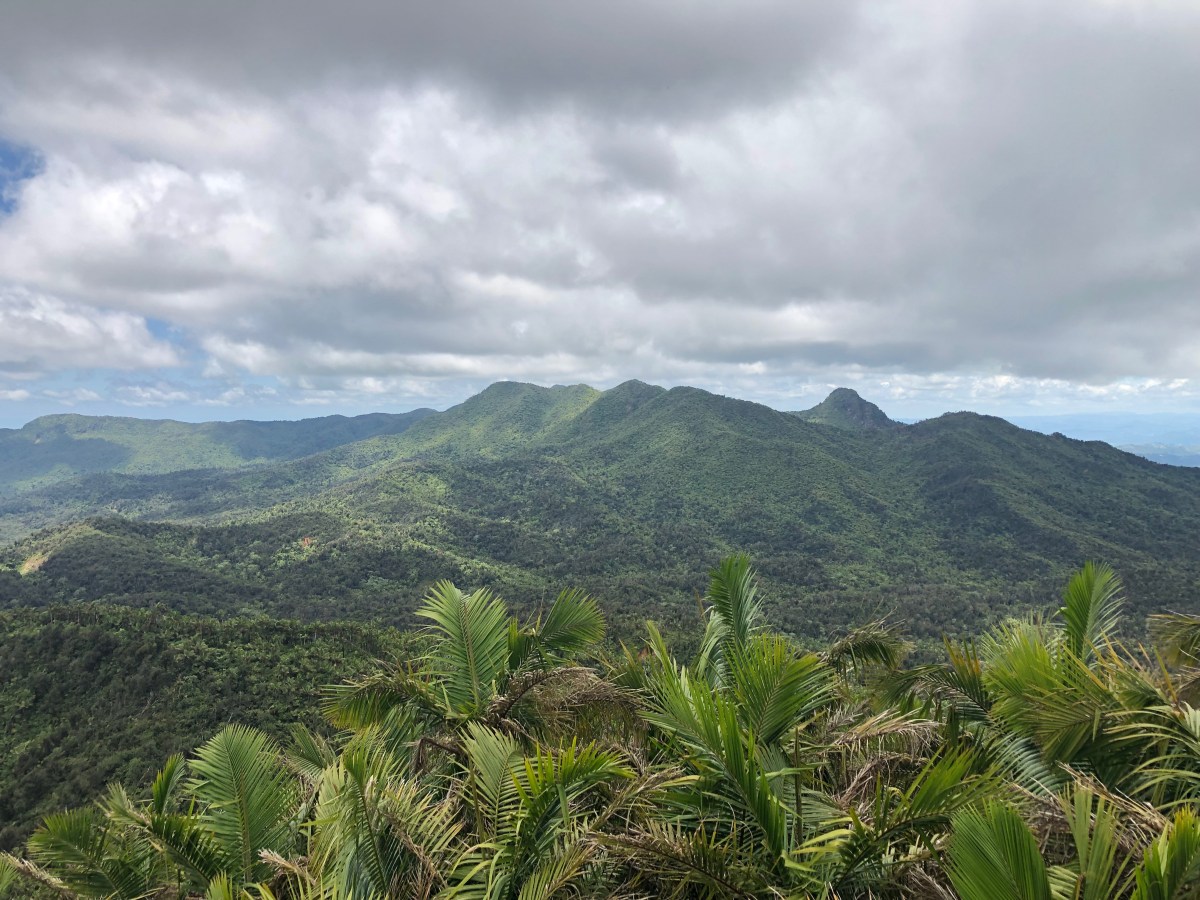
  • Our main hike of the day was up to the Mt. Britton Tower. This was another New Deal era construction of stone and masonry, built by the CCC in 1937-38 as an observation tower. The hike took us through a palm forest and cloud forest. The views from the top were marvelous! As we descended and got back to the intersection with the El Yunque Peak Trail, we decided we were pretty hot and tired and opted not to pursue that peak. So we returned to our cars and started to head back down toward the entrance, but with a couple of more stops planned. 
  • La Mina Falls may have been closed, but the Juan Diego falls were open to hikers, and it was only about a half mile, mostly flat. Doable for tired footsies and a tired, hot pooch. We followed the Juan Diego Trail to the falls. We were not prepared for swimming, but Ocean had no qualms about laying down in the water, away from the natural pool formed by the falls, where several people were enjoying the cool, refreshing waters. Next time, I’m packing my swimsuit.
  • Our final stop on the way down was a the Yokahú Tower. It’s a 69-foot tower that was built by a former Forest Supervisor in the early 1960s. From its top, one can view four forest types in the National Forest area. Wish I’d read about it before hand. I just stood up there and thought, “Great views!”

After the Yokahú Tower, we headed out of the forest in search of lunch in the town of Río Grande. We ended up at a lovely roof-top restaurant for a late lunch. We got back to our apartments around 5pm for rest and showers. Around 7pm we were starting to get hungry, so we all ordered pizza from a place in Old San Juan that delivers and chowed down in Mike & Victoria’s digs. We were all beat, but in that “we’ve been enjoying the outdoors all day” kind of way.

Enjoy the slide show of El Yunque. As you read in my post last week, we returned to Salinas the following day after a ton of shopping. Our next stop would be the Spanish Virgin Islands, which is what I will tell you about next time.

Until then, stay safe and take care of each other! 
Additional information about the park:

Entering the main area on route 191 requires a ticket, and those reservations are made online through the Forest Service for just $2/car. They control how many vehicles, private and tour, enter the park each day. If you just showed up, it’s highly likely you’d be turned away. Sometimes tickets are available weeks in advance, but most often they’re made available only 24 hours ahead of time, and they go fast! We did not know this in advance, so it was lucky that Dave decided to book our planned Tuesday excursion early Monday morning before we even left Salinas. He went online around 7:30 am and learned that you need to set up an account first, so he did that. At 8am, tickets for the 8-11am entry time became available. It took Dave only 15 minutes to purchase our tickets and by the time he was done, half the slots were gone. He checked about 15 minutes after that, just out of curiosity; there were only 9 slots left. Phew, that was close! 

  • There’s also an 11am-1pm entry option and those tickets become available at 11am.  Regardless of entrance time, once you’re in the park you can stay until it closes at 5pm.
  • The Visitor Center does not require a reservation to enter, but it does incur a fee of $8/person, payable at the gate. We did not visit this.
  • There are a couple of other roads that go through lesser traveled parts of the forest and do not require tickets. There are trails and scenic drives/stops, but some are closed, so check the website first.

Puerto Rico, part 4- Isla Caja de Muertos

We and s/v Caretta arrived at Caja de Muertos early on the morning of April 19th. It’s a beautiful island about 5 nm south of the Ponce area. Nobody really knows how it got its name, but it’s had that name for a couple hundred years at least. The name translates to either “Dead Man’s Chest,” likely due to its association with pirates back in the day, or more commonly as “Coffin Island.” 

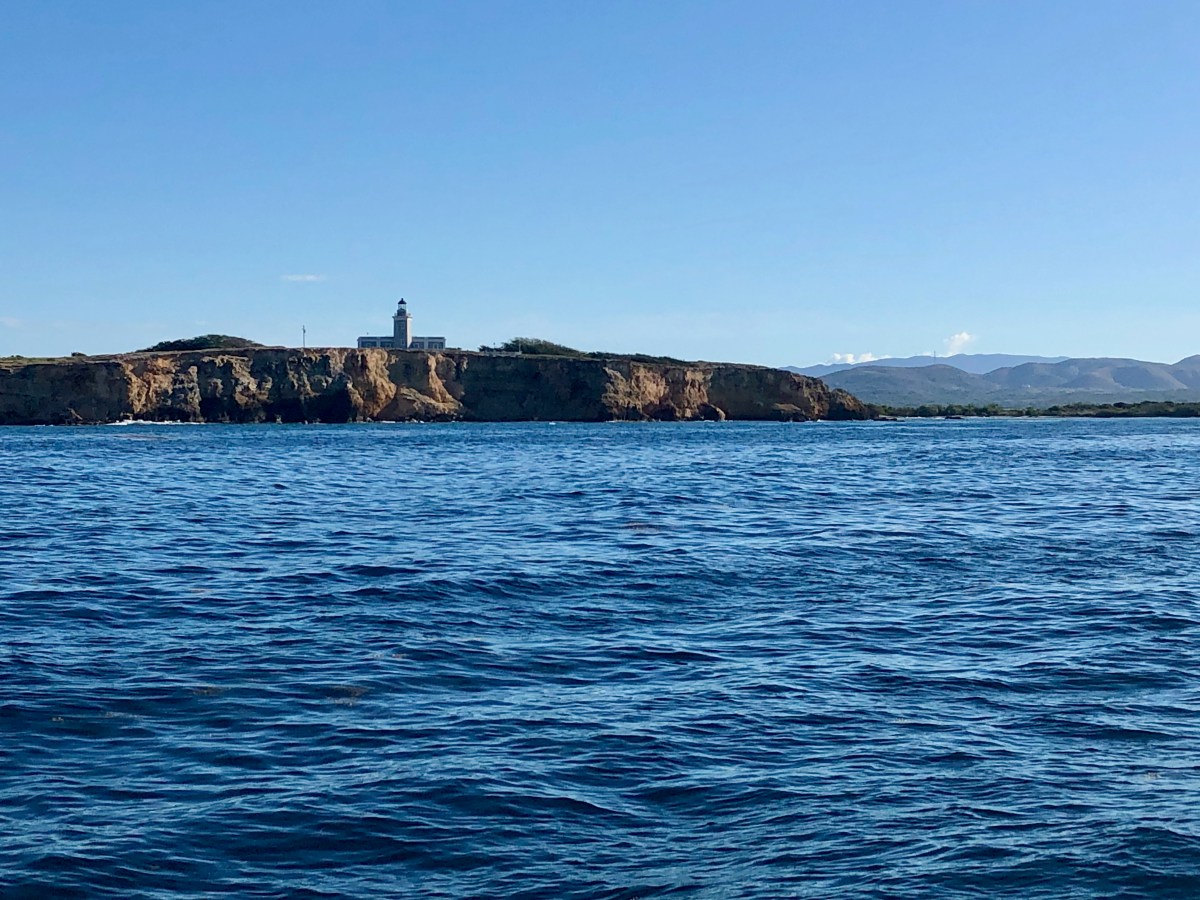
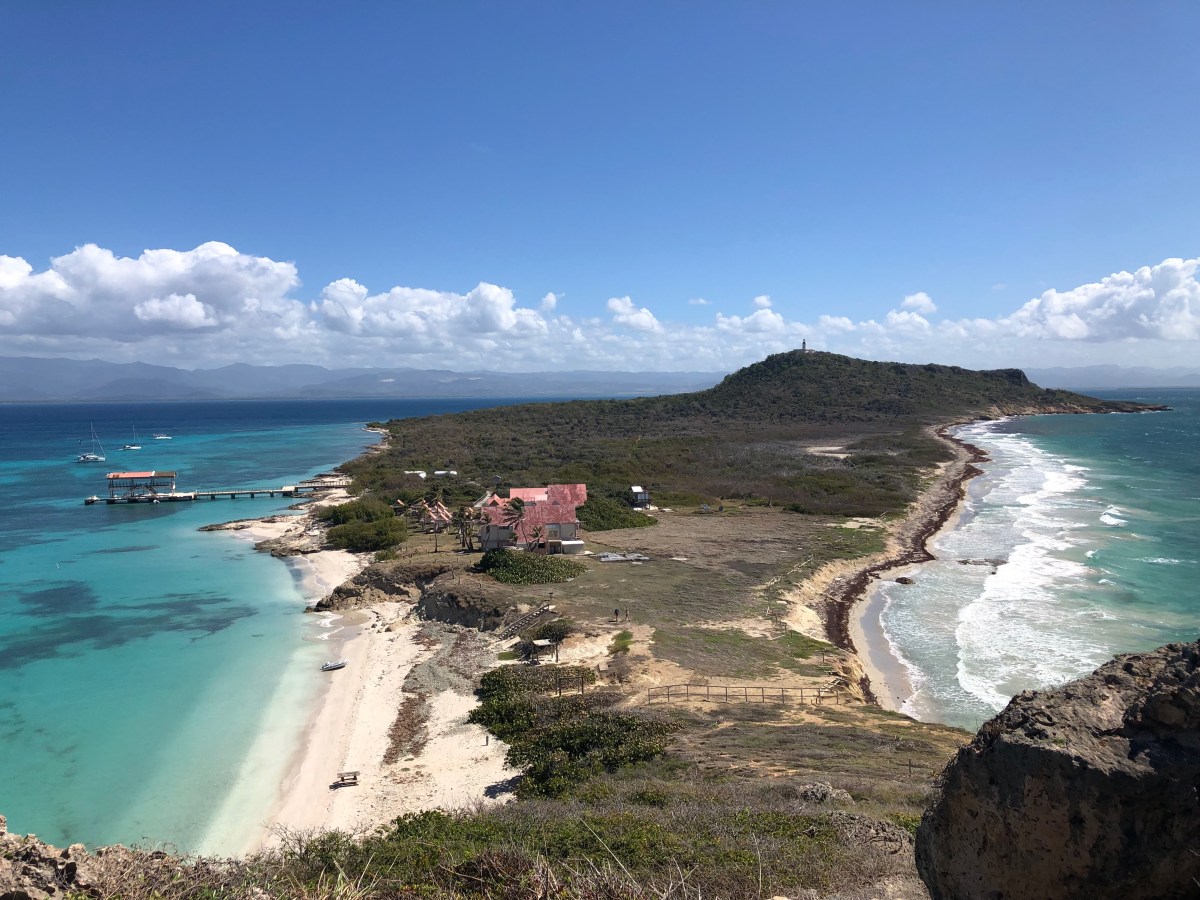
Caja de Muertos is about 2 miles long and ½ mile wide. The old Spanish-built lighthouse, constructed from 1885-1887, sits atop a 170-foot hill on the NE end. There is a lovely shallow, clear sand swimming beach called Pelícano on the SW end of the island on the Puerto Rico side. The beach on the Caribbean side is a turtle nesting site and therefore closed to humans, not that you’d want to attempt walking it the days we were there. Oh the crashing waves! The island was designated a Nature Reserve in 1980 and placed under the administration of the Department of Natural Resources (DRNA). They received approval in 1985 to develop the island as a center for tourism. A large cement ferry dock was built, plus covered, cement cabanas with picnic tables, a small museum, restrooms, a service building, and a residence/office for the DRNA rangers who lived there. Ferries and local private boats arrived daily from the mainland. We hear the island was heavily visited and quite the hangout for locals on the weekends.

If you’ve been keeping up with my Puerto Rico posts, you may notice that I’m speaking in the past tense again. Like Gilligan’s Island, this Nature Reserve is now officially closed to the public; “enter at your own risk” and with your own transportation. Although Hurricane Maria in 2017 closed the island for almost a year, it was the January 2020 earthquake that led to the current damage that has yet to be repaired. The DRNA residence/office is in a shambles. The museum is damaged and has been emptied but for some posters on the wall and some bits and bobs lying around. The ferry dock is heavily damaged. We explored the ruins to the extent we felt was sufficiently safe. We do enjoy exploring ruins. We heard that private boats still come out on the weekend to anchor in the shallows and enjoy the swimming beach, which is still marked off with floats. Cruisers still stop here, too. It shortens the trip between Ponce and Salinas, not to mention it’s too beautiful to miss.

We hiked up the small hill on the SW end of the island and discovered a shrine to the Madonna under a rocky overhang. The next day we hiked up the taller hill to the lighthouse ruin. Since the island was closed, nobody has officially kept the trail cleared so the cacti and thorny bushes were encroaching. We were only able to do the hike because Andrea (s/v Caretta) dropped off Barry with his machete at 7am. He whacked his was up to the lighthouse, clearing the trail of the worst thorny offenders. We picked up Andrea at 9am and started up the trail to meet Barry. We still had to pick our way carefully along the often narrow path, but thanks to Barry’s efforts, we made it unscathed to the top. The lighthouse sits atop the former keeper’s house, long since abandoned for that purpose when the light was automated in 1945. The quarters are said to have briefly housed a museum a number of years back. Now it’s just the damaged remains due to time and earthquake. We climbed the metal spiral staircase to the cement platform just below the actual light. Those views were stunning, but then we continued our climb up to the light itself and braved the narrow exterior platform, briefly, for photo ops. The wind that high made it challenging to hold the camera steady, but the views were totally worth it!

Our friends on Wild Horses arrived from the Ponce anchorage pretty early on Friday the 21st. The gang was together again! They explored the island, though not the lighthouse (the trail would not have been safe for their dog, Ocean) and hung out on the beach with Caretta. Dave and I explored a couple of spots along the NE end that Barry & Andrea had explored previously. There were piles upon piles of conch shells of varied types. We found a lovely Helmet Conch shell to bring back to Indigo Lady. We all gathered on Indigo Lady that afternoon for some trip planning and socializing. Sometime after 5:30pm we got a text that s/v Happy Jack was coming our way, about 10 minutes out. None of us had actually met them, but they had been part of the Easter Rebels WhatsApp group started back in Luperón when we were all looking for a weather window to head to Puerto Rico. We invited Brent and Andrea to join us once they’d anchored, which they did. So we all finally got to meet in person and hang out for a bit. 

The next morning, we, Caretta and Wild Horses hauled anchor and set off for Salinas back on the mainland of Puerto Rico. From there we would be taking a road trip together to Old San Juan, which is what I will tell you about next time. Until then, stay safe and take care of each other!
Puerto Rico, part 3- Gilligan’s Island and Ponce

Just sit right back and you’ll hear a tale…

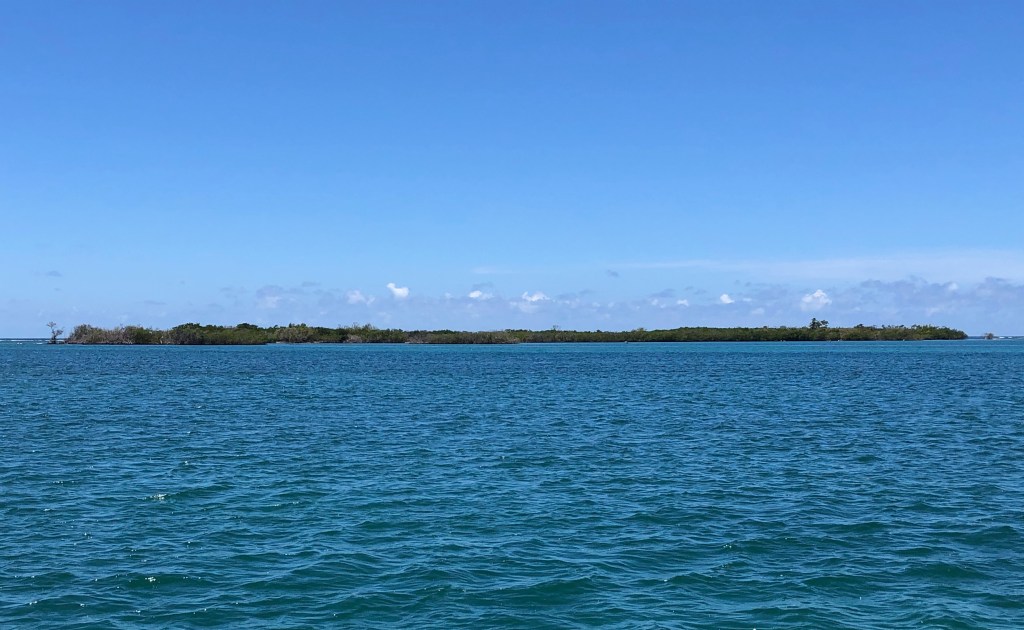
Okay, the Gilligan’s Island we went to has nothing at all to do with the famed TV series. Its real name is Cayo Aurora and it is one of three islands that make up the Cayos de Caña Gorda, managed by the Department of Natural Resources (DRNA). It’s about 1 nm off the coast of Guánica. I think I read somewhere that the person who named it sort of looked like Bob Denver (that’s the actor who played Gilligan), but I can’t confirm that. 

Gilligan’s Island is a small mangrove island. It used to be quite the weekend hotspot for locals and tourists alike. There was a long dock where the hourly ferry from the mainland would drop off day trippers. Tourists at the resort in Guánica could rent kayaks and paddle over. Locals would bring their own boats over on the weekends to pick up a mooring ball and spend the day enjoying the water in the mangrove creeks or at the tiny beaches tucked among the mangroves. There were covered picnic areas with brick fire pits, changing huts, and a bathroom facility. 

I’m writing in the past tense because that was all destroyed during an earthquake in January of 2020, and it hasn’t been repaired or replaced yet. The quake also caused some sinking of the land and the mangroves have filled in. The park is officially closed, so visiting is at one’s own risk and with one’s own means of transportation; the ferries don’t go there anymore. We dinghied over and landed on a couple of very tiny sandy spots to walk what remains of trails we could find. We dinghied partway through one of the mangrove creeks and saw lots of fish. Dave and I snorkeled part of the reef on the south side of the island. The first dive mooring we picked up was in a field of sea grass overgrowing tumbled, dead coral, but we had more luck on the other ball closer to the breaking part of the reef. The hard coral was mostly dead, but its structure remained. It must have been amazing when it was alive. There was new coral growth, which is encouraging. We saw a small, healthy elkhorn coral and some fire coral, as well as some other hard corals for which I don’t know the names. We saw the usual suspects of small fish. It wasn’t a great snorkel, but it is a pretty little island. 

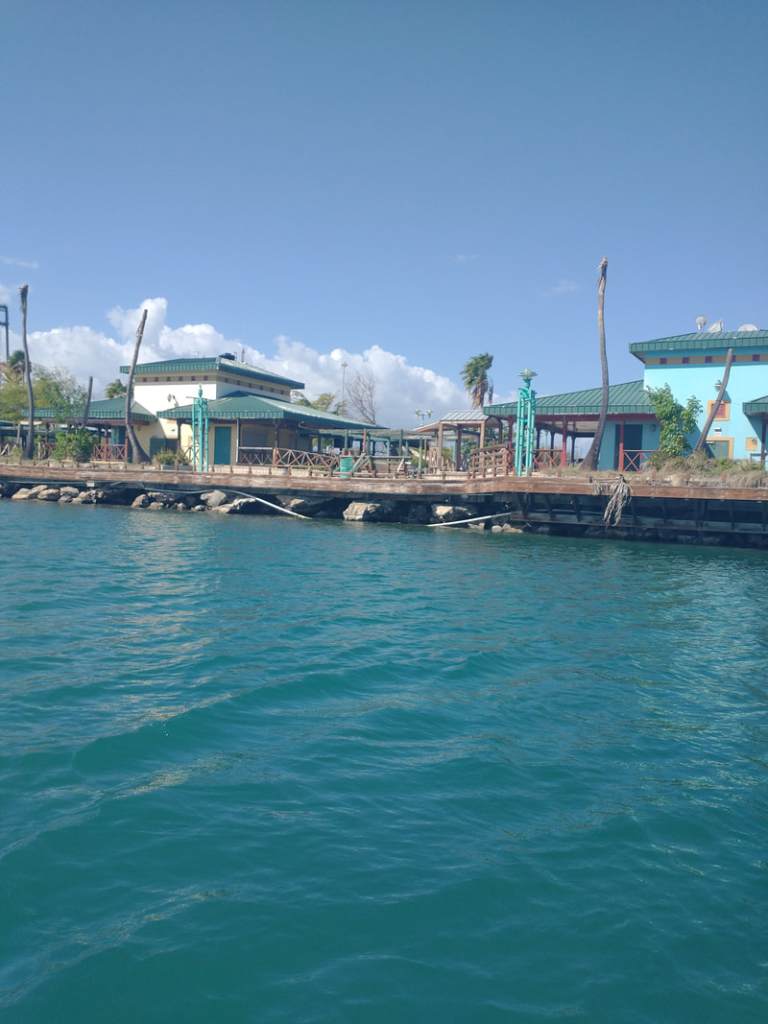
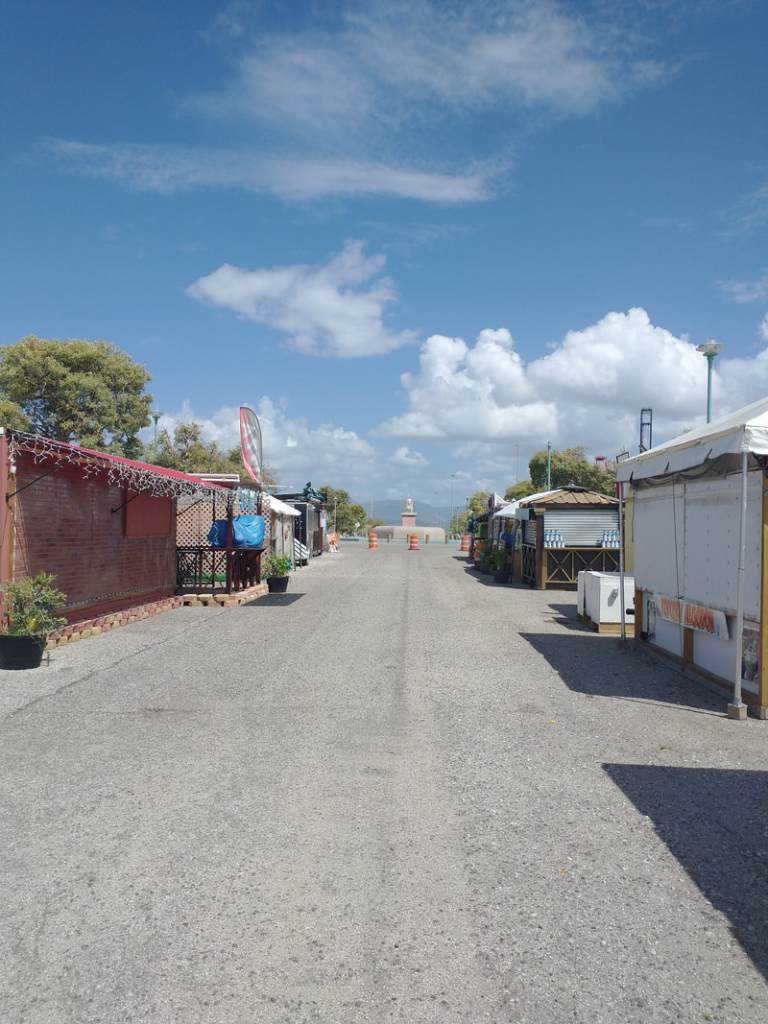
The next day was Tuesday, April 18th and we moved with our buddy boats the short distance east to Ponce. The preferred anchorage is near the Yacht Club. It’s a small area and not very pretty, not to mention crowded with the mooring balls and anchored boats. It’s the first time we put out our typical 5:1 scope to set the anchor, but then drew it in to a 3:1 scope. (Scope is the ratio of water depth to length of anchor line/chain put out. If the water is 10’ deep, we would put out 50’ of anchor chain for a 5:1 scope, 30’ for 3:1.) Sometime in the late 1990s, the La Guancha Boardwalk here was opened to the public. It was a hot spot on the weekends, especially at night. The waterfront was lined with shops, restaurants and bars. Again, past tense. It was heavily damaged by Hurricane Maria in 2017, and before any repairs were started it was damaged further by the January 2020 earthquake. There is a fishing cooperative at one corner of the anchorage that allows dinghies to tie up (the Yacht Club does not). So we went ashore and wandered a bit. About ¼ mile from the original boardwalk we encountered a park with food trucks lined up along the way. It’s a makeshift replacement for the boardwalk, but being a Sunday, the trucks were closed, except for a couple that sold drinks and hot dogs. We wanted a more substantial lunch and there was nothing within walking distance. One of our group had seen another dinghy dock at another fishing cooperative about a mile up into the bay. So we dinghied up and asked the fishermen and the DRNA officials (there was an office there) if we could leave our dinghies for a couple of hours while we got lunch. They put us all into an empty slip and recommended a restaurant about ½ mile down the road. It was a yummy lunch!

That was the sum total of our time in Ponce, at least for us and Caretta. Wild Horses stayed another two night and took care of some provisioning. Wednesday morning, we and Caretta headed 5.5 nm southeast to Isla Caja de Muertos, which is where I will pick this up next time. Until then, stay safe and take care of each other!
Puerto Rico, part 2- The Caribbean Sea, at last!

On Saturday, April 15th, we finally made it officially to the Caribbean Sea!!! We and our buddy boats, Wild Horses and Caretta, set out that morning to rejoin Bitty Rose at La Parguera on the south coast of Puerto Rico. We and Caretta anchored in Bahía Fosforescente (Phosphorescent Bay), while Wild Horses anchored at Punta Montalva where they could get Ocean (their dog) ashore for her needed walks. Bitty Rose joined us and Caretta in the bay that afternoon, having initially been anchored near the town of Parguera.

Just after sunset, the tour boats started arriving and asked us to turn off all our lights, even our anchor lights. They brought people to snorkel amidst the phosphorescent dinoflagellates. We waited until most of the tour boats had gone before getting into the water ourselves around 9pm. Initially I wasn’t expecting much. Dave had gotten in and agitated the water, but I saw nothing of note from my vantage point on Lady’s stern. I was used to seeing phosphorescent critters glow from above. Dave assured me that if I got in the water with my mask on and stuck my face in, I’d be amazed. He was right! We spent about 20 minutes in the water just off our swim ladder, kicking our fins and swirling our arms through the water to make the dinoflagellates glow. I felt like I was doing magic. It looked like a night scene from Avatar, with the floating tufts of light, only these were roundish and in the water. It was amazing! (Unfortunately, my underwater camera could not pick up these balls of light so the images live on only in our memories.)

After breakfast the next day, Sunday, we moved Lady a couple of miles to anchor off Cayo Carocoles, a bit north of Cayo Enrique, which was supposed to have the best snorkeling. We dinghied around a bit, with me occasionally sticking my masked face in the water to find “the good stuff.” We eventually picked up a mooring ball further from the island and closer to the edge of the reef near the channel, where it’s a bit deeper. We got in the water and swam in a westerly direction toward another mooring ball at the edge of the channel. The hard coral was still predominantly dead, but there were healthy patches of soft corals, some rather tall and bushy. There were plenty of fish.

After our snorkel, we dinghied to town to check it out. It used to have a dinghy dock, but that was destroyed by a hurricane or earthquake, or both. Fortunately, our friends on s/v Guajira had been there a couple of weeks ahead of us and provided intel from a local liveaboard for how to get ashore. The de-facto “dinghy dock” was now a pair of beached sport fishers between two dive boat businesses. We tied our dinghy to the bow of one, carefully climbed over its partially attached bow railing, stepped across to the other boat to its transom, stepped off the transom into shin-deep water, waded a few feet toward land, and climbed a metal rail fence. 😅 Ta-da, town! We weren’t there more than 30 minutes, since there wasn’t much of interest to see, for us, anyway. It’s a tourist waterfront with dozens of small restaurants and food windows, and souvenir shops selling mostly kitsch. We walked up a road more into town to a little convenience store/market to see about getting some fresh produce, but they didn’t have much. We returned to Lady, ate lunch, then dinghied over to Punta Montalva to join Wild Horses and Caretta. Bitty Rose joined later. Dave & I had everyone over to Lady for a couple of hours just for drinks and conversation. 

The next morning, Bitty Rose set out in the wee hours heading for Ponce. The rest of us set off about 8:30am for Gilligan’s Island. Gilligan’s Island?! Yeah, you’re gonna have to wait to get more about that. 😁  Until then, stay safe, and take care of each other!