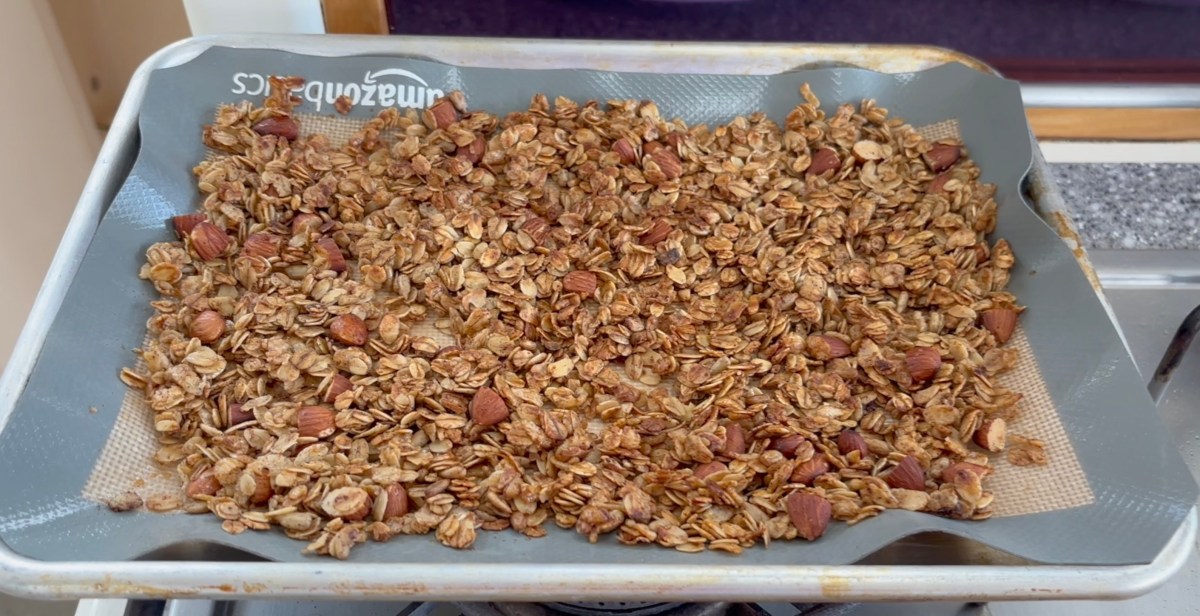
Okay, folks, this is our last day on Lady this year. Tomorrow we will pull into the boat yard’s harbor and move ourselves into the guest house. Lady gets hauled out for hurricane storage sometime in the next few days. We’ve been busy getting her prepped, and there’s more to do before we fly home Thursday, so I don’t have time to write much of a blog post. Instead, here’s a video in which I share the recipe I use to make granola onboard (complete with a blooper). If you want to know why I don’t just buy granola, you’ll have to watch the video. 😁
I will continue to post when I get home, because I have a bunch of stuff from this cruising season that I haven’t shared yet. Guaranteed I’ll post as consistently as I’ve been doing thus far this year. 😂
Until next time, stay safe and take care of each other!
Although I’m sure you prefer reading about the beautiful side of our liveaboard experience, I feel an occasional dose of the messy side is warranted. So today I will regale you with rotten potatoes and some other recent unpleasantness. I may as well condense the recent sob stories into a single post and get it all done at once.
The potato saga…
Dave mounted five wire baskets in the starboard, forward companionway to allow for more food storage. I refer to this as our ‘pantry.’ Three of these baskets are dedicated to produce that keeps well without refrigeration. This includes citrus, apples, potatoes, cabbage, and an occasional butternut squash or underripe tomatoes. The wire bottoms are padded with a piece of foam from some part we had shipped once, and the sides are lined with that cheap shelf liner stuff people use in drawers or to prevent items from sliding around on counters. This prevents produce from becoming damaged from the pressure of the wires, especially if we’re under way and bouncing around. While at home on land I will buy less than beautiful produce- a bruise or blemish here or there, but that won’t do onboard if I want it to last as long as possible. I wrap each piece of citrus in aluminum foil. I cover other produce with a light cotton towel, and I have mounted a small fan over the baskets that I can use to circulate air every once in awhile. I keep apples, citrus and potatoes in separate baskets so they don’t impact each other’s ripening. I check and rotate individual pieces, though probably not as frequently as I should. Yet despite all these efforts, something still goes bad on occasion, like the two red potatoes this past week.
Saturday morning, May 14th, Dave was working on troubleshooting the starboard generator and asked me to get a tool for him in the workshop. As I passed the ‘pantry’ to do this, I smelled something off. That can’t be good. I delivered the tool then checked the baskets. Yup, two red potatoes had started oozing to the point where some of it dripped down onto the packaged items in the two baskets below. It stunk! Over the next 1.5 hours I emptied out the potato basket, putting the two offending spuds in the sink and checking the others for contamination then set them aside. I dutifully chopped the rotten spuds into tiny bits, rinsing the gooey parts down the drain (and therefore overboard) but put the diced bits in our compost container. We dump that when we’re offshore, not in enclosed bays like the one we were in. I then proceeded to empty the two lower baskets, spraying each package with a vinegar-water solution then wiping them down and laying them aside to completely dry. I removed the basket liner and soaked it in soapy water in the sink, then hung it on the lifelines to get a few days of rain/sun before seeing if they’re usable because they still smelled after their soapy soak. Then I sprayed and wiped each of the three impacted baskets plus the surrounding wall and floor and let them air dry before returning items to them. The potato basket is temporarily lined with towels until I can reclaim or replace the other lining material. And just like that- poof- a good portion of the morning lost to rotten potatoes.
Now for the additional unpleasantness…
The above happened the morning after we arrived in Hatchet Bay, Eleuthera. Just before sunrise the prior morning, Friday the 13th, we departed our quiet anchorage on the west side of Current Settlement on the south end of North Eleuthera to pass through Current Cut to the sound beyond and a 17 nm trek to Hatchet Bay. It wasn’t pretty. The seas were much worse than forecast. This happens to us a lot when we’re traveling on inner, shallow bays like this part of Exuma Sound. It doesn’t help that wave forecasts are really meant for open ocean, but one has to add local conditions to the estimates and we’re still not good at that. We were in mostly 6’ seas just off our starboard bow with very short period. Read that as very bumpy. Our bows were washed over many times. The wind was also pretty much just off our nose at about 17-20 kts. We were making about 3 kts of speed. Dave changed our course to bring us within ¼ mile of shore where the water stayed deep right up to the rock cliffs and closer to the point we were heading for. This cut down the seas to about 4-5’ feet and gave us a slightly better angle so we were bouncing around less and not washing our bows for about 1/3 of the trip. We were about 1.5 nm from the entrance to Hatchet Bay and had to turn into those seas and winds to get around the point that precedes the entrance. At the same time, a rainless squall kicked up the winds to about 30 kts and the seas to 6-8’. Now we were making about 2 kts. Two catamarans passed us en route to the same safe haven of Hatchet Bay. Dave was very glad they did, because he got to watch them maneuver to enter the very narrow, 50-60’ wide, cliff-lined cut into the bay. Following their example, he passed the entrance a bit, turned to line us up with it, and slowly steered us through with the seas pushing us from behind. As soon as we were through the cut, the bay was practically flat. Salvation! We were anchored by around 12:30pm and were thinking about lunch when we realized we had a mess to clean up. We had forgotten to close the portholes! The rough seas from starboard splashed water all over the aft cabin on that side. So we spent 45 minutes removing, drying, rinsing, wiping. Ugh! We were beat! We had a simple lunch of sandwiches and spent the rest of the afternoon in the hammocks; rum was involved, and a virtual (Zoom) sundowner meeting with our boat club. We had leftovers for dinner and managed a movie before crashing for the night. Only we didn’t sleep well…
First of all, the restaurant/bar we were anchored in front of played loud music until well after midnight. On top of that, the wind was very gusty. A nice steady wind makes for comfortable, peaceful sleeping, but gusts interrupt our sleep by triggering the part of our boater brains that registers changes that may need our attention. Then, at some point in the wee hours of the morning it started raining. I think I got up 3 or 4 times that night to check our anchor circle and the boats around us, closing hatches, lowering our hatch a bit to cut down on the gusts, closing it for rain, reopening it for airflow. So much for sleep!
I’ll end this diatribe by bringing it full circle. To do that, I need to back up to Thursday the 12th. After one and a half weeks of delay in Spanish Wells and over $400 in shipping fees, the generator part we had been waiting for finally arrived. Dave installed it Thursday evening at our Current Settlement anchorage, the day before we left for Hatchet Bay. The part did not solve the problem, so we still have a non-functioning starboard generator. Dave was troubleshooting the wiring of said generator Saturday morning when he asked for that part that led me to discover the rotten potatoes. There you go, full circle.
I promise my next post will be about something more pleasant. We did a couple of very fun things while at Hatchet Bay, so stay tuned!
Until then, stay safe and take care of each other.
We’re still home. We hope to be able to return to Lady in early April; fingers crossed. Until then, I plan to post once a month.
This month is a flashback to this past July when we were in the Bahamas and I had the idea that it might amuse you to see how I do laundry on Indigo Lady. At this point you’re either going to keep reading and then watch the video, or close your browser and wait for my next post. I won’t be offended if you opt for the latter.
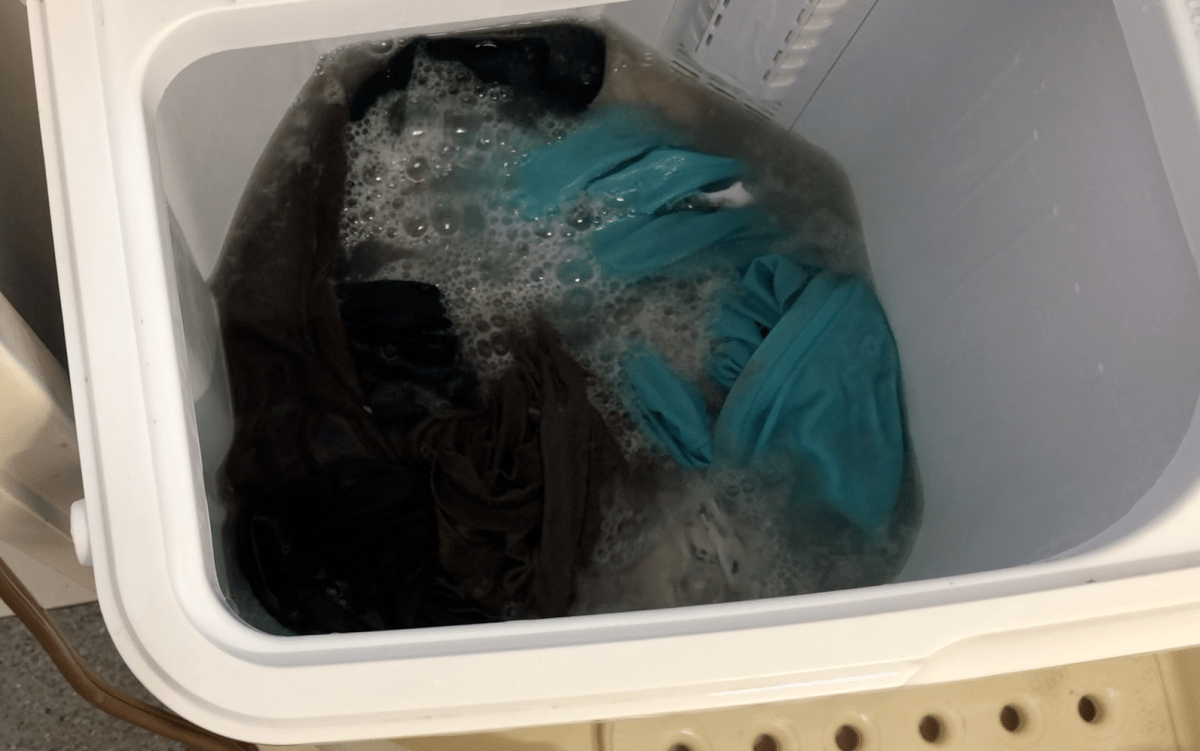
Doing laundry on the boat requires some planning. It takes more of my time and attention, and it requires the right timing and weather conditions. Unlike doing laundry at home, I cannot just load the washing machine, go do something else for an hour, switch to the dryer and leave the dried load there until I need the dryer again. Washing the laundry onboard requires my full attention for 60-90 minutes per load, or at least setting timers so I don’t forget what I’m doing. Then there’s the fact that our “dryer” is the sun. The whole process needs to happen during daylight hours on a single day so everything is dry before the sun goes down.
These are my basic criteria.
We need to have enough fresh water in our tanks or I need to do laundry when we’re running the water maker. Each load uses about 20 gallons (maybe someday I’ll actually measure this). Our tanks hold 160 gallons.
I need a sunny morning and afternoon, preferably with a breeze but not a big wind. Less than 10 kts of wind is preferable, though sometimes I don’t have much of a choice. The more wind, the more clothespins I need to use and the more I worry that something will blow overboard (it’s happened).
I like to start around 9 or 10 am, especially if I have to do more than one load. Even if rain isn’t forecast, there can still be showers in the late afternoon/early evening due to local heating/cooling cycles, so I want the laundry dry and back inside by then.
This video demonstrates the actual process of doing laundry with our setup. I squeezed it into 2.5 minutes thanks to iMovie’s speed feature. If I left out anything you’re wondering about, ask in the comments.


 Life on Lady