USVI Dives 2024

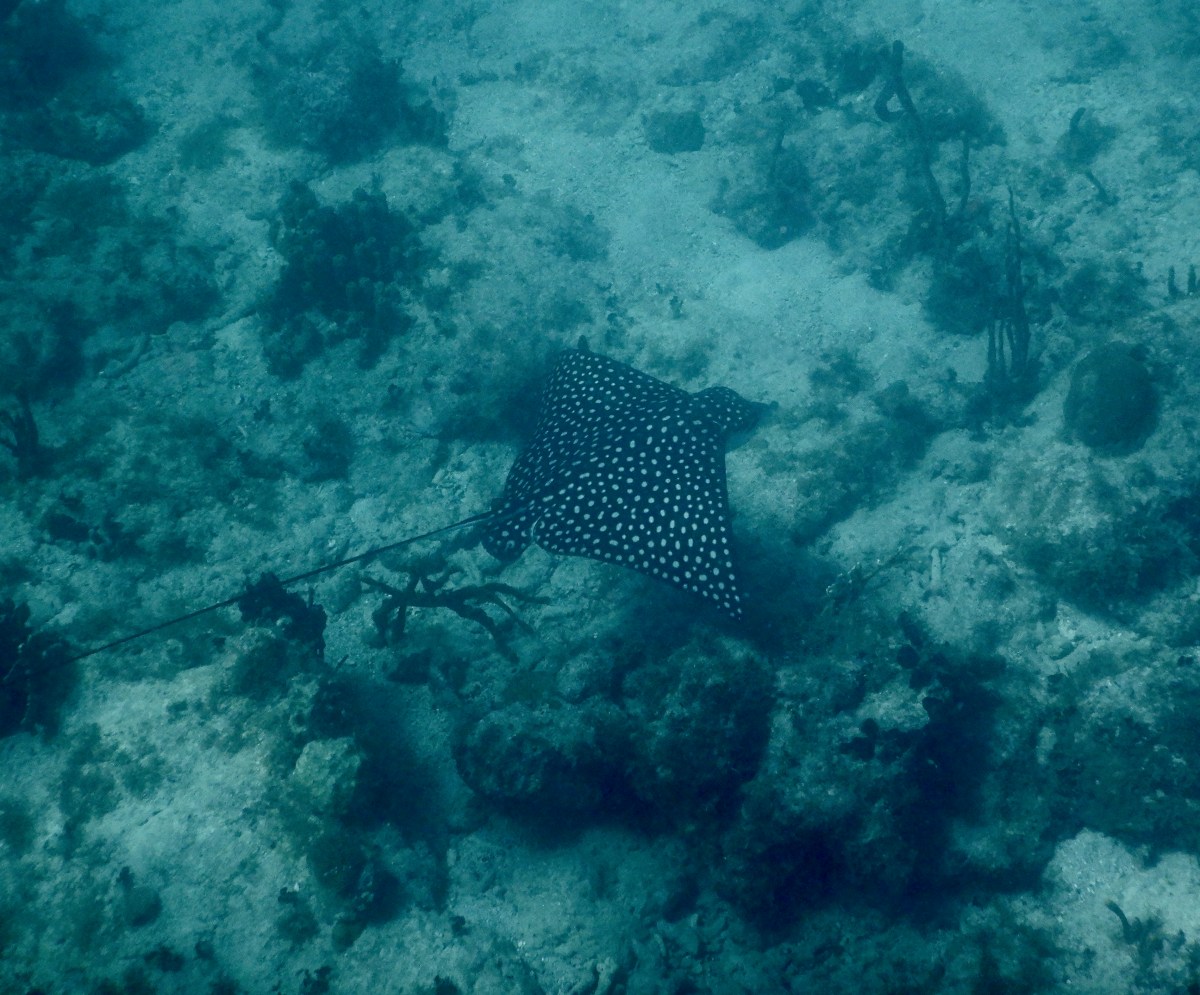
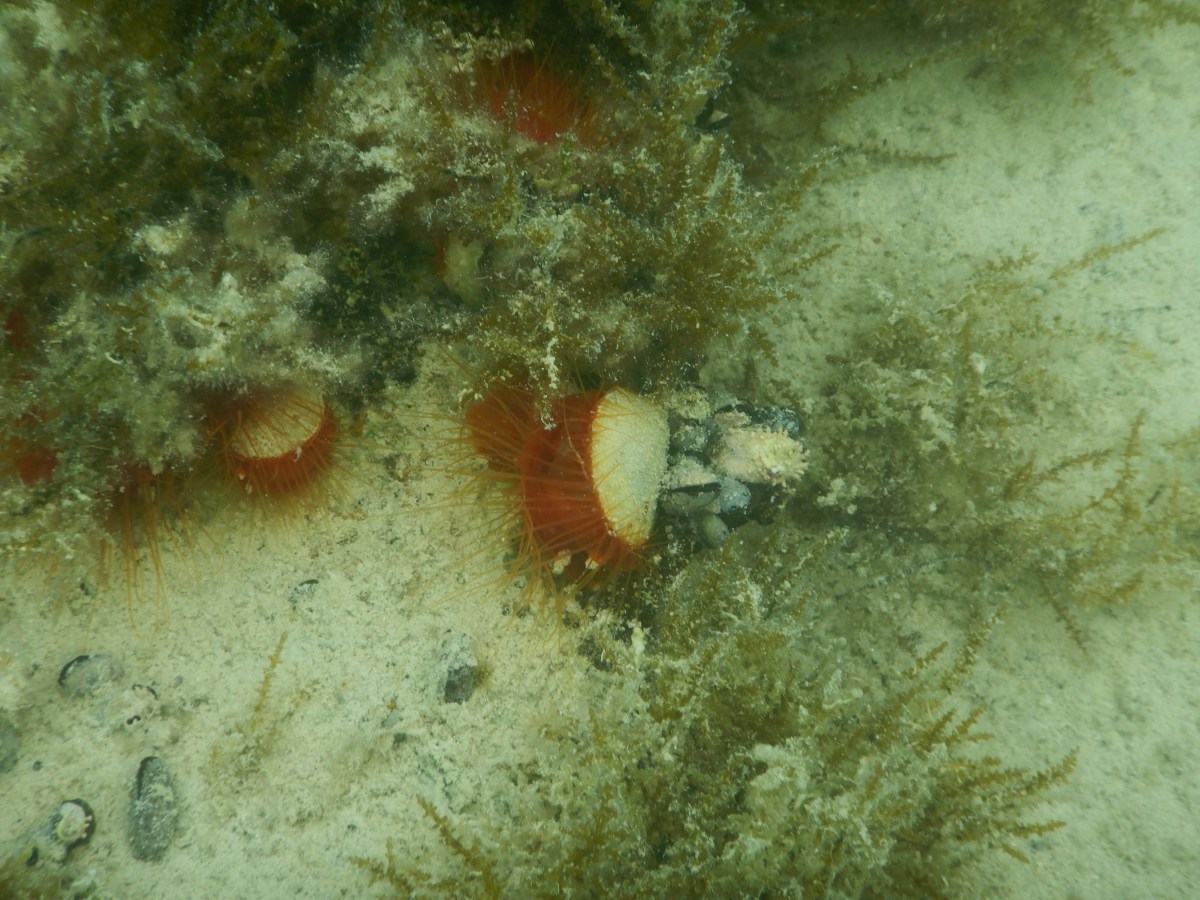
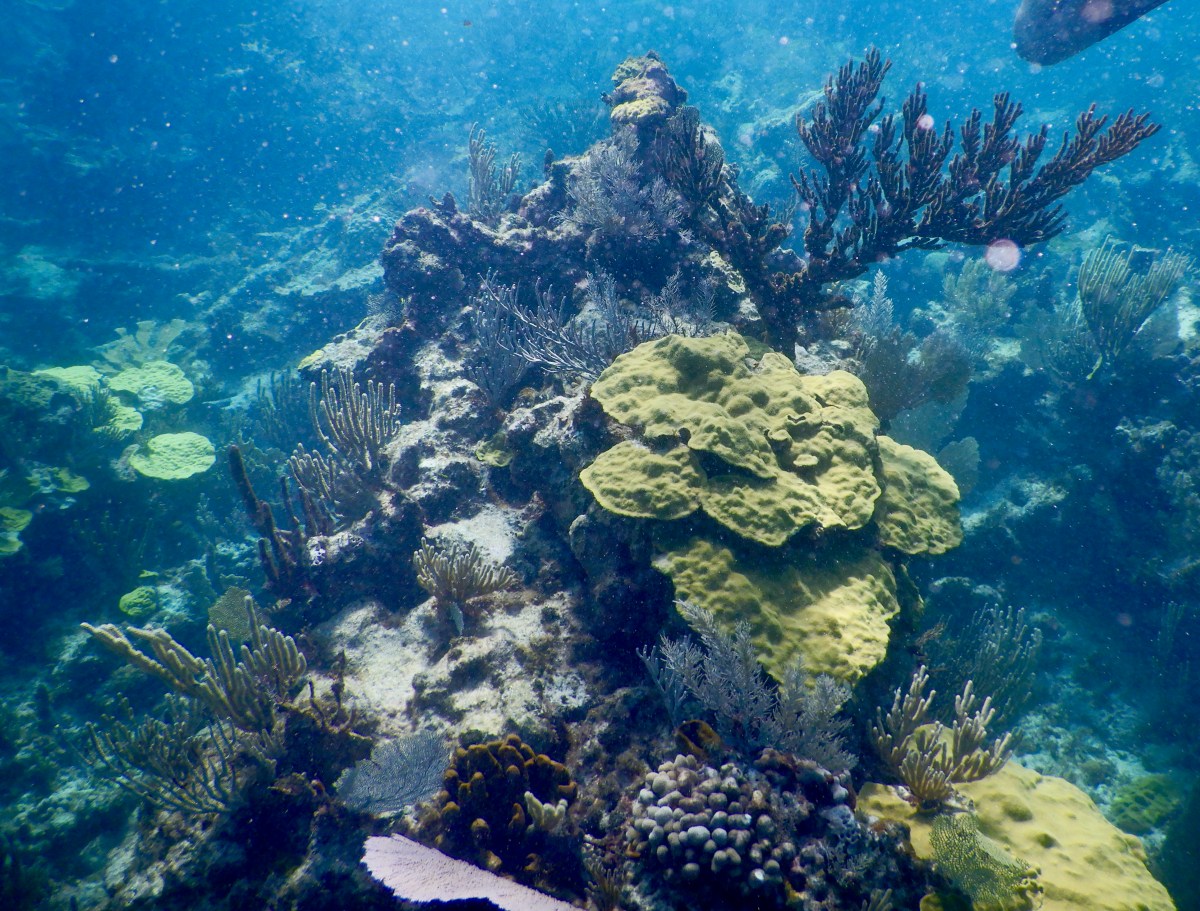
I have finally caught up with my dive photos from our time in the USVI. I managed to get my count down from about 250-300 photos/videos clips to 56 photos and 10 video clips. I’m going to attempt to stop taking so many underwater pictures. How many photos of barracuda does one need, really? I’m going to try to focus creatures of which I don’t yet have pictures. Sure, that’s gonna work. 😂 There are some sea creatures I enjoy so much that I can’t help but take just one more photo. (I’m looking at you, porcupinefish.)

I don’t have a fancy underwater camera, so the camera doesn’t always capture the way things looked to my eyes. I use Photos and iMovie to edit the lighting aspects of my images to get them closer to how I saw them. Nothing fancy; I don’t want to misrepresent the reality.

I spend quite a bit of time trying to identify the creatures I capture in photos; I like to know what I’m looking at. Take my identifications with a grain of salt, though; I’m not an expert. We have a good set of identification books onboard by Humann & DeLoach, but sometimes my pictures don’t jive with the books’ pictures and descriptions, in which case I can only attach a general level identification- sponge, parrotfish, etc. I’m especially bad at identifying specific sponges and corals, so when I name those in a slideshow, you may just see “pretty orange sponge” as a label. Those who know me personally, know that I used to be a biology teacher, but I’m not going to bore you with taxonomy. I will, however, say that sponges and corals are animals; perhaps not everyone knows that. Now you do. 

In this post I have divided my underwater finds into two separate slideshows- “scenery” and “creatures.” Just enjoy the scenery; I didn’t label anything in that one. The “creatures” slideshow names the organisms and organizes them into “not fish” and “fish.” No label beyond the name of a fish indicates that it’s an adult. Some reef fish young don’t look like the adult version, however. You may see me include in my labels: Juv (juvenile) or Int (intermediate) if the picture is not of an adult. For parrotfishes and wrasses, IP (Initial Phase), indicates an adult, while TP (terminal phase) identifies a sexually mature adult male. You can, of course, ignore the labels and just enjoy the pretty pictures.

We’re in the BVI for another couple of weeks and have a friend coming to visit a week from today. (Looking forward to having you aboard again, Ian!) At some point I’ll sort through my BVI dive photos, but since we’re not done diving here yet, that won’t happen for a while. Don’t worry, I have other things to write about.

Until next time, enjoy the USVI dive pics, stay safe, and take care of each other!

From our dives at Sprat Point on the south end of Water Island, at Buck Island off St. Thomas, and at Cow & Calf.
From the same dives as mentioned in the caption of the Scenery video.

While we were waiting…

This cruising season has felt like a lot of waiting. We’re used to waiting for weather windows, of which we fortunately don’t need many this year, but this season has been about a different kind of waiting. While we waited for a weather window to get from St. Kitt’s to the USVI, we were simultaneously waiting for our new battery cells to arrive in St. Thomas. Once they were in the USVI, we waited for winds and waves in the harbor to die down enough to be able to get the batteries onboard safely. Then we waited for my folks to arrive. We waited for our new freezer to arrive. We waited for the Salty Dawgs meetup in the BVI to start. Just as the meetup was starting, we learned that our current boat insurance provider would be dropping Caribbean coverage. That launched us into four weeks of waiting for a new policy to pan out, which included waiting for various responses to our numerous emails requesting policy and survey quotes, waiting for the day of the insurance survey we eventually booked, and waiting for the survey report to be finished (the latter happened quickly). Then we waited for the final insurance approval, which, thankfully, also arrived quickly. Yes, we have a new insurance policy that will commence as soon as our current one expires. Yay! Now we’re just waiting for wire transfer information to pay them, but that’s the icing on the insurance cake at this point. 

While we were waiting for insurance to pan out, it also meant waiting to determine the rest of our cruising plan before heading to wherever we would haul out the boat for hurricane season. This also meant waiting to book said haul out facility, as well as the lodging we’ll need during the boat closeup process. We are extremely lucky that our new policy allows us to keep our boat in St. Kitt’s again for hurricane season, so we don’t have to alter our original cruising plan. Hooray! This isn’t a cruising season where we’ve had to make a lot of miles, so we have had the luxury of being able to wait comfortably, and we have been enjoying ourselves. There are far worse places to be waiting.

There are some advantages to all this waiting. Since we’ve been staying close to good cell coverage areas in order to deal with insurance, we’ve been near easily accessible on shore WiFi where I’ve been able to do some data-intensive online stuff over WiFi rather than using our data. We’ve done a lot of snorkeling. We reconnected with cruising friends we made last year. A little over a week ago, we spent several lovely days in Brewer’s Bay where we made some new cruising friends, including Connor, Blake (@captain_blake_sparrow on IG) and Dan (Adventureman Dan on FB and IG). We’ve also had some of the best diving since Puerto Rico last April; three awesome dives in two days!

With the insurance monkey off our backs, we will continue our explorations, hopefully only with the typical waiting for the right weather conditions 🤞. Our current plan is to head to the BVIs for a few weeks, and from there to St. Martin for a few weeks before returning to St. Kitt’s. As always while cruising, we’ll see how that goes.

It will take me a while to sort through the dive pictures, but I’ll get to them eventually. For now, enjoy this slideshow compilation of our various snorkel excursions thus far. Until next time, stay safe and take care of each other!

Diving around New Providence

In case you didn’t know, Nassau is the capitol of the Bahamas and it is on the island of New Providence. Some of you may be more familiar with Paradise Island, location of the Atlantis resort. That island is connected to New Providence by a bridge, though in the past it was not and therefore accessible only by boat. Okay, that’s enough of a geography/history lesson.

I’ve already written about our stay at New Providence (January 28th post), but I promised some pictures of our dives. So here’s some diving eye candy for you, and I just bought myself another week without having to think too deeply about what to write in this blog of mine. I will, however, tell you that we’ve covered a lot of water since New Providence. As this posts, we are in George Town, Exumas, waiting on a weather window to continue our trek southeast.

Enjoy the slide show, and until next time, stay safe and take care of each other!

Nassau to Warderick Wells

Sorry for the delay, but last weekend was very busy with no time for blogging. Let me catch you up. It’s a good thing I keep a journal while onboard, because I’d never be able to catch you up otherwise.

We set out for Nassau about 8am on the Sunday, the 15th. Seas were bigger than predicted at the start, but mostly following, so it was only a little bumpy but nice and sunny. About 1/3 of the way through the trip we lost at least one wave direction and the ride smoothed out. Both generators worked as programmed, which was nice. We arrived in Nassau Harbor, New Providence around 2pm and were anchored in the East Channel (technically not the harbor) by 2:30pm. Got some additional provisions ashore, secured a marina slip for the following weekend, then had dinner at the Poop Deck. I was craving a burger, which is rare for me and usually only when we’re onboard, go figure. The Poop Deck’s burger did not disappoint.

Monday we exited the harbor’s west end and headed further south along New Providence to anchor in West Bay and later Old Fort Bay (between West Bay and the harbor). We dinghied to the beach at Clifton Heritage National Park for a walk and chatted with some other cruisers who gave us some intel about George Town, Exuma and a lead on a marina in Puerto Rico where we might leave Lady for this hurricane season. Score!

We spent the next few days diving. We dove the “sculpture garden,” such as it was. There were several half domes with holes in them seemingly marking the way to a 5-foot sculpture of what appeared to be a merman, then more of those half domes leading to the largest underwater sculpture in the Bahamas, Ocean Atlantis, at about 20-feet or so. Sadly, the reef near the dive mooring had fish, but the coral was mostly dead. We also dove two wrecks. The Anthony Bell was a 90’ Bahamian tugboat that was intentionally scuttled to create a reef dive site. A few hundred feet away lay the Willaurie, a 140’ Danish-built barge (1907) that sank naturally not long after the Anthony Bell was scuttled, sometime in the late 1980’s. Their bottoms rested in about 50’ of water but they extended upward to about 35’. I stayed up near their tops while the boys explored them more closely. We were able to anchor Indigo Lady in sand on the north side of Goulding Cay to dive the reef there. Again, mostly dead coral, which is depressing to see, but lots of fish. At one point I was swarmed by a school of tangs that were so close I couldn’t even get pictures. That made me giggle.

Friday morning we set out to find the purported shallow reef near the beach in Old Fort Bay, but all we saw from the surface was more dead coral. So we returned to Lady, hauled anchor and headed back to Nassau’s East Channel to anchor for Ian’s last night aboard. Saturday after breakfast we hauled anchor and pulled into a slip at the Nassau Harbor Club Marina. I spent the morning cleaning the cabin and remaking the bed for my folks’ arrival that evening while Dave saw Ian off for his taxi to the airport. 

Then the provisioning began. Dave and I made three separate trips to the nearby market and were just starting to stow the final load when we heard my folks calling out their arrival, around 5:30pm. And who was escorting them? Our friend Paul whom we’d met back in August 2020 at Fort Pierce City Marina. He noticed my folks looking around and offered to help. They told him they were looking for Indigo Lady, which surprised the heck out of him! It was nice to catch up with him a little over the next day as we continued our provisioning tasks. Earlier that same day, Dave ran into the husband of a former colleague of ours, just a couple of slips down from, who had just arrived from the Chesapeake Bay, single handing. Small world! Sunday was even busier than Saturday. I did two loads of laundry at the marina plus we made two more provisioning trips, the last of which was to the market about a mile away. That one required a cab ride back- too heavy a load to haul! Once it was all stowed it was definitely time for fruity rum drinks, then back to the Poop Deck for dinner.

Monday the 23rd we dropped the dock lines and had a lovely passage to Allan’s Cay in the northern Exumas. Unfortunately, it was too bumpy to dive at the dive moorings, so we just anchored and went for a swim. Tuesday we dinghied to the little beach inside SW Allan’s Cay to show my folks the iguanas, then later moved Lady to the north Highbourne Cay anchorage for a less rolly night. Wednesday brought us further south to Long Cay with the hope of diving from Lady on those dive moorings, but again it was too bumpy. Instead, we anchored and did a little dinghy excursion stopping at a little beach for my folks to practice snorkeling because it has been three years since they’ve done it. Thursday we moved down to Shroud Cay, the first big island in the Exuma Cays Land & Sea Park and picked up a mooring. We did a dinghy excursion partway across one of the mangrove creeks. There was a surprising lack of sea life; we saw only three sea turtles and a couple of needlefish, but it was lovely scenery on a lovely day.  On the way back we pulled dinghy up onto a little beach and played in the current and relaxed in the water before returning to Lady. Yesterday we arrived at Warderick Wells, the headquarters of the Land & Sea Park. We picked up the mooring and went ashore to pay and to get maps of the snorkeling sites and hiking trails, then dinghied around a bit to get the lay of the land.

I’m typing this Saturday morning as we wait for the rain to stop so we can go ashore for a walk. Hopefully the water will be calm enough this afternoon for Dave & I to snorkel one of the reefs.

I haven’t had time to sort through my photos, so enjoy the one of Ocean Atlantis at the top of this post, and when I get to it, I’ll put together a little slide show and post that .

Until then, stay safe and take care of each other!

Sweetings Pond

Our final excursion at Hatchet Bay was to Sweetings Pond, location of the proposed Seahorse National Park. It is a land-locked pond up to 45’ deep in some places, connected to the ocean somehow underground. It has a diverse array of sealife, minus the predators, which makes it an important refuge for the resident species, especially the seahorses. I found a 2020 Discover article about it that you can read if you like. It’s encouraging to know that the Bahamians are planning to protect this sensitive area and its life, while still allowing eco-sensitive use of it.

Thank you to SV Breath and SV Reef’n It for the intel on how to find this place and what to expect when we got there. There is no signage for Sweetings Pond on the main road and they gave us landmarks to look for. They also told us about the snorkeling rules we couldn’t have known about otherwise until it was too late and we were on site.

We walked the 1.5 miles to the pond, read the rules, then carefully got in. It was not the best day to snorkel due to the solid overcast, but it was still quite enjoyable. We spent about 40 minutes tooling around along the edges where it was shallowest, about 10’ (Dave went a little deeper). We saw one seahorse. Technically, Dave saw it. Despite his shining the dive light on it and pointing at it, I couldn’t discern it as a seahorse separate from the plant life it was hiding in. Alas! We did see numerous fish like we’ve seen diving some of the reefs; bivalves with bright orange, feathery mantles; fast-moving brittle stars; lovely, white nudibranchs; large crabs hiding under the overhangs; good-sized gastropods. A very worthwhile trip!

Every once in a while, we’d poke our heads above the surface to track the dark clouds that had been fairly far off when we started. They got closer, kicking up the wind and creating a bit of chop on the surface, the darker clouds reducing visibility. We got out of the water, put all our wet gear in the canvas bag we brought, stowed anything we wanted to keep dry in the drybag, donned our coverup gear, and then it started raining just as we set off back toward town. We knew this was a possibility when we set out on this adventure and decided that getting caught in the rain before or after snorkeling wasn’t a bad thing. In fact, we appreciated the free fresh-water rinse. Two very kind people stopped to ask if we wanted a ride, but we declined. No sense soaking their car when it was a fairly short walk. It only rained for about half of the walk back and started again just as we reached the dingy, a sprinkle really. We rinsed our gear and the rain got heavier, so I stayed out to hang our salty clothing and sandy towels and got my hair good and rinsed of the salt. 

When I was done, I dried off, changed and Dave made us hot cocoa with dark rum, which we enjoyed while munching on banana bread and playing cribbage. It rained most of the rest of the evening, so we spent it inside playing cribbage, listening to the news, eating yummy pizza, and watching a movie.

I got a handful of decent pictures and put them in this slide show. I struggle with free-diving, so my photos are all from the surface, which limits what I can capture. Enjoy, stay safe, and take care of each other.

Diving in the Abacos: Part 1- Fowl Cay National Park

General Overview of Our Dives

While in the Abacos from late May through mid July of 2021, we dove 10 times on 5 different reef systems. Two were small reefs inside the Sea of Abaco, that’s between Great Abaco Island and the small barrier islands to its east. The other three reefs were on the Atlantic side of those barrier islands, but we always dove the leeward sides (facing the barrier islands) because the conditions on the Atlantic side were either too choppy, or there was no place for us to anchor Indigo Lady and it was too far to dingy.

I always enjoy being under the sea watching the fish school along the coral heads, but this series of dives seemed more desolate than our Florida Keys dives back in August of 2020. I went back through the videos from our Florida Keys dives and finally realized what had been missing in the Abacos- fish! Okay, we saw fish in the Abacos, as you’ll see in the video, but we saw far fewer fish, less variety, and rarely any large fish or sharks. I would say the coral was about in the same condition both in the Abacos and Florida Keys, though perhaps a little worse off in the Abacos. I suspect Hurricane Dorian (early September 2019) had something to do with that. Still, there were fish to see, and I do find it peaceful to watch them from inside the fish tank, so to speak.

Fowl Cay National Park

The video that follows is a compilation of five dives done in Fowl Cay National Park over three days in June (two in early June, one in late June). The picture at the top of this post shows the area we explored.

The park was established in 2009. It used to have around twenty dive moorings one could pick up (with a small boat, not Lady’s size), but Hurricane Dorian removed many of them. There were about 6-8 left, or reinstalled, on the Grouper Alley/Flywheel Bay side, labeled in purple on the picture above. We dingied to these from Indigo Lady, which was anchored on the inside of the north end of Fowl Cay. When we dove the Twin Reefs/Tombstone area, labeled in green, we anchored Indigo Lady in a tongue of sand near the anchor mark in the picture and launched hookah from her sugar scoops (the stern steps).

Now settle back and listen to me breathe through my regulator as you as you enjoy the giant fishbowl of Fowl Cay National Park.

An interesting Fourth of July

I hope everyone enjoyed their Independence Day celebrations. We didn’t do anything here to celebrate, unless you count making burgers for dinner. Our “interesting” 4th of July had nothing to do with the holiday itself. Keep reading.

On the morning of the 4th we awoke to no breeze in White Sound, a harbor at Green Turtle Cay, and a bunch of mosquitoes hanging out on the screen door, fortunately on the outside. So right after breakfast we hauled anchor and headed for the anchorage on the NW end of Manjack Cay for hopefully fewer bugs and at least a little breeze. We were not disappointed.

We arrived at the anchorage around 10:30 AM to find two enormous catamarans rafted together at anchor; one 70 feet long, the other 82feet! It wasn’t 5 minutes after we set our anchor when we heard what we thought was a call for help. We saw splashing in the water between us and the shore and grabbed the binoculars to make sure it wasn’t people playing around. It wasn’t. The water wasn’t turning red either, so it wasn’t a shark attack, thank goodness. Perhaps I should clarify that last sentence. Tour boats feed sharks and rays in this anchorage, so I needed to know if I should grab the med kit. It wasn’t necessary. We saw a young man’s sit-atop kayak sinking underneath him. He was stranded, and panicky, probably because he knew there are sharks in the area. Nobody onboard the catamarans he came from seemed in a rush to help their own friend. They didn’t even attempt to drop their dinghy. One guy did, slowly, get ready to head over in another kayak. Really, people? So we dropped our dinghy and beat the kayak over. We got the young man into our dingy and towed the sunken kayak back to his boat. Interestingly, he asked how he could have handled the situation differently. We assured him there was nothing he could have done to prevent the kayak from sinking; it had developed a leak and the airspace just filled with water. We did suggest having a life vest with him if he’s not a strong swimmer, and to not thrash around if he’s concerned about sharks. 

After the rescue, we gathered our snorkeling gear and dinghied to mid-beach to snorkel from there. The SW corner of this anchorage is where tour boats feed the stingrays and sharks. I’m a bit of a wuss when it comes to sharks, so I wanted to start where there likely weren’t any. There were two small power boats in that corner, but they weren’t feeding the sea life, just hanging out on the fourth of July and swimming. We worked our way over there and did in fact see several rays, a couple of nurse sharks, a couple of small reef sharks, a sea turtle and a bunch of the same fish we’ve seen everywhere in the Abacos. More and more small power boats started showing up making it too dangerous for us to continue snorkeling, so we swam back to our dinghy and went back to Indigo Lady. 

We had ourselves a leisurely morning the next day and finally suited up for another snorkel just after lunch. This time we headed straight for the SW corner. There were no tour boats feeding the sea life and we had no intention of doing so ourselves. Turns out intention is irrelevant. As soon as we got within 20 feet of the beach, motor still running, the rays moved in. The mere presence of our dinghy was like ringing the dinner bell. There were half a dozen or more good sized rays skating in the shallows, in inches of water. As soon as we waded to our ankles they swam to and over our feet. A couple of 3-foot reef sharks showed up too but stayed 15 or so feet off the beach. I wasn’t excited about trying to get my snorkel gear on as I was being harassed by rays, so I let Dave get in first and draw them off. I’m so brave. Eventually I got in and we were treated to another lovely snorkel. The rays mostly lost interest in us once we were in the water with them. The reef sharks kept well away from us. A 6-foot nurse shark covered in remoras swam close by, followed by a smaller 4-foot one. Realizing we had no food, they lost interest quickly. At one point Dave stopped swimming and I saw a 6-foot reef shark swim past him about 10-20 feet in front. It leisurely disappeared into the dark beyond and we did not see it again. We also saw a fairly large sea turtle that Dave swam with for a bit. Getting back into dinghy was challenging. As soon as we were standing in the shallows again, there were the rays looking for food. We had to carefully work around them to get dinghy back into the water without stepping on them. I was afraid they’d get too close to the motor when we started it, but it all worked out. 

On our way back to Lady, we stopped at a smaller charter catamaran that had pulled into the anchorage earlier in the day. We chatted with the couple for a bit until it started to rain. We got back to Lady just in time to avail ourselves of the free fresh water to rinse off ourselves and our snorkel gear. There were clouds as far as the eye could see, so we had ourselves a little snack and decided to spend the rest of the afternoon watching movies. It was about 3:30pm. 

All day up until now, we’d seen rain cells passing to the east heading in a northerly direction. That means all the anchored boats were pointing southward, the direction the weather was coming from. As we were heading back to Lady from our snorkel we realized all the boats were pointing north, but the rain appeared to have come from the south. Curious. We didn’t think much more about it until the wind started blowing 25-30 kts kicking up 3-5 foot waves…from the north. Then the anchor drag alarm went off. Dang! We knew our anchor wasn’t buried well, but it was in what appeared to be a sand patch and it was south of a lip of mud and weed. Had the predicted SSE wind directions played out, we would have blown back on our anchor south to north, firmly rooting it in that mud & weed. Instead, we were blown north to south which just dislodged the anchor from what was apparently sand over rock. Rocna anchors usually reset if they drag, but we dragged 150 feet or more and our Rocna just skipped along the bottom. We decided it was unlikely we would be able to reset the anchor successfully with this wind and sea direction and this bottom, so we just pulled it up and headed south toward another anchorage 2 miles away, protected from the North. It was a pretty quick trip because once we rounded the point of the anchorage, the north winds and seas were at our backs giving us a push. Less than 90 minutes later we were anchored snugly in our new location. We opted for leftovers rather than cooking, and finally settled into our movie.

We would spend four wonderful days and nights in this anchorage and surrounding area, but I’ll write about that next week.

Until then, stay safe and take care of each other.

Diving the “Coral Gardens”

Sorry I didn’t post last weekend as promised. We were too busy enjoying ourselves. I believe I promised you a description of our first real dive here. 

I don’t know who named this area “Coral Gardens.” I suspect it was a local dive shop. At any rate, it was definitely worth backtracking to dive here. We knew there were dive moorings for small boats, so we couldn’t take Lady over. Instead we loaded the hookah system and our gear into dingy and made the 1.5 mile run to the dive site. The site is across from one of the cuts between barrier islands out to the Atlantic side and there was some swell coming in. Fortunately, a wet dingy ride doesn’t matter when one is going diving. There was nobody else there when we arrived around 10:15am, so we had our pick of the dive moorings. We picked up the one in the center so we could swim easily in either direction depending on the swells, which there were, and any current. As soon as we picked up the mooring, a little sea turtle came over to greet us. It was then that I realized I’d left my underwater camera on Lady! Argh! Of course the little turtle swam around our dingy and hookah the entire time we were preparing for the dive and I couldn’t get any photos <sigh>. He skedaddled as soon as we got in the water.

I was amazed at how big the reef was, given that it’s on the inside of the barrier islands and not on the Atlantic side. It was probably a couple hundred yards long; we didn’t dive the whole length of it. At the deepest point it was about 20 feet tall. There was plenty of reef all the way up to the surface for snorkelers to enjoy as well. There were many fish, small ones, like a nursery reef. 

The current on top of the surge was tiring, so our first dive was only about half an hour. When we came up for a snack and some water, all the moorings were occupied! Another dingy was sharing our mooring and had some snorkelers off it’s stern in the shallow part of the reef. We chatted with the guy driving that dingy, had a bit of a rest and went back down for another, slightly longer dive. The current had abated and we stayed in the deeper part where the surge wasn’t as strong. When we came up again, our neighbor dingy was gone, and the boats on the other moorings were just preparing to leave. 

Once we got back to Lady, we put our toys away before having lunch. “Putting our toys away” is about a half hour process. We have to get the hookah and hoses back onto Lady from the dingy and rinse it all with fresh water. Then we have to rinse all our gear and ourselves and set everything out to dry. On diving days we always spend the rest of the afternoon relaxing, not that we need and excuse to relax.

We were preparing to return to Coral Gardens the next day in the afternoon when we saw dark clouds and rain not too far away. Good thing we hadn’t taken off in the dingy yet, because it would not have been fun to get stuck in that squall out in dingy! It only clipped us with some showers and winds on Lady but went right over the dive site. Our plans thwarted for that day, we hunkered down inside for the rest of the afternoon. The following day we did return to Coral Gardens and this time I remembered my camera. So I’ll stop blabbing and let the video speak for itself. Enjoy!

FYI, it takes too long to put together these videos and I’d rather spend my time down here doing other things. Further videos of our exploits in The Bahamas will have to wait until we get home in the fall, just like I did last fall after our dive trip to the Florida Keys. (If you don’t know what I’m talking about, scroll back to my posts from September-December 2020. That was some great diving!)

Be safe, and take care of each other!
Dave’s Undersea Wildlife Encounters

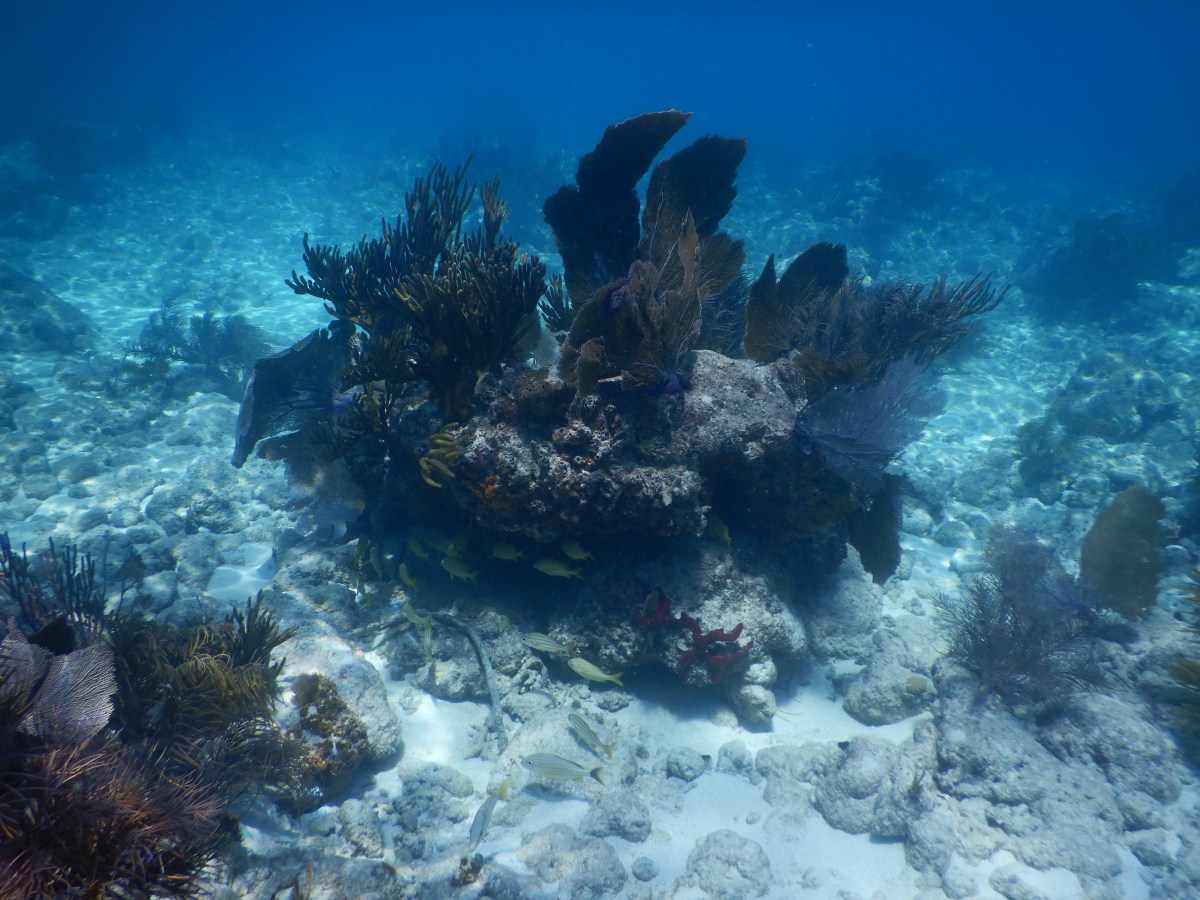
My husband is a fish when he’s diving. Okay, perhaps seal is a better comparison since they, like Dave, are mammals. My point is, he’s quite at home under the sea, which isn’t surprising since he’s been diving for almost 50 years. I love watching him when we dive, trying to coax critters from their hideouts, joining a school of fish, or simply following quietly behind or along. What I share with you today is a compilation of videos I captured of Dave interacting with the sealife and a couple of times when sealife interacted with him without his knowledge. I chuckled putting this together and watching the final cut. I hope it makes you chuckle as well.

I’m taking a blogging hiatus until sometime in January. So Happy Holidays, Happy New Year, and enjoy the show!

Fowey Rocks and Stiltsville

Our last dive stop before heading back to the marina and then home, was at Fowey Rocks Lighthouse at the northernmost end of the Maritime Heritage Trail. It is an iron-pile lighthouse that was built from 1875-1878. We’d hoped to also dive the Aratoon Apcar, sunk just off the lighthouse, which was still under construction at the time, in 1878. The current was too strong, however, and this was a less complete wreck than some of the others, so we gave it a pass. Instead we had a short dive in the shallow corals on the southwest side of the lighthouse. We once again started out against the current so we could ride it back to Lady afterward. The lighting was good and there were some lovely corals. I took a few pictures and one video which I share below.

After our dive and lunch, it was time to head back into the ICW for the trek back to the marina. From Fowey Rocks Lighthouse we headed toward Cape Florida, taking the Biscayne Channel into Biscayne Bay. This took us right through Stiltsville, which is also part of Biscayne National Park. The first of these shacks on stilts was built by one Crawfish Eddie Walker sometime in the 1930s. It has a somewhat colorful past, which you can read about by following that link. There were 27 such structures at its peak in the 1960s. Exposure, time and Mother Nature limited the life of these structures, and hurricane Andrew in 1992 left only 7 standing, none of which are original to the heyday of Stiltsville. The non-profit Stiltsville Trust was established in 2003 and is working cooperatively with the park to rehabilitate the buildings to support educational and interpretive services. One can acquire a permit to visit the structures from the Stiltsville Trust, but you’ll need your own (not large) boat to get there. We may try to visit one or two when we next go down if we can find a place nearby to anchor Lady and take the dinghy over.

This week’s video slideshow includes a handful of pictures and video from the Fowey Rocks dive, plus the stills I took of the Stiltsville structures. Several of the stilt houses line Biscayne Channel, but are still pretty far away for my camera, so close ups get a little blurred. Other of the houses are small blips in the distance. Regardless, you’ll get the idea of what they’re like. Enjoy!